
Today was a great day for interesting finds at our site. Shortly before lunch, Pam found her second eggshell bead of the trip and great celebration ensued. Despite being our principle investigator, Pam is famous for never finding anything remarkable. She always seems to come up short when her eager grad students are involved. That’s why it was great when she found her first bead two days ago, and added to her repertoire again today. Furthermore, her luck seemed to kick off an archaeological chain reaction. After lunch, Katie suddenly discovered that the large rock she had mapped in place was actually a massive quartzite core with a number of flake scars removed. An hour or so later, Jennifer found what looks like a polished ground stone pendant in our karai. It has a hole drilled through the top and certainly looks as though it was used as some kind of jewellery.
 Finally, in the last half hour of the day, I found an eggshell bead in situ in the only stratigraphically intact corner of our unit. In non-archaeological terms, I found something really cool in a context that tells us about where it came from and who used it. So far I’ve been feeling pretty lukewarm about the Iron Age (after all, it’s the Stone Age we want), but I don’t have any complaints today. Interesting artifacts are always welcome, regardless of their persuasion.
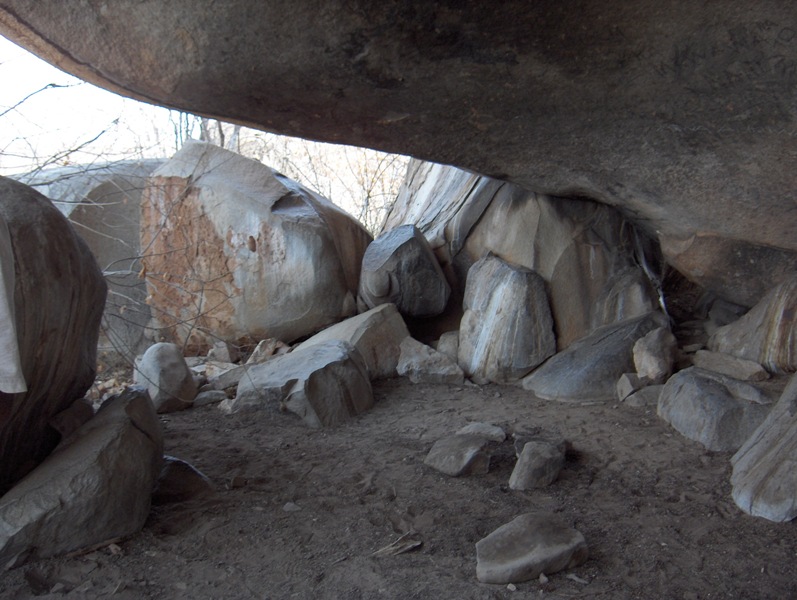
 While we were digging up some fun in the rock shelter, we received a phone call from our friend and soon-to-be collaborator Frank. The day we left for Iringa for the second time, we received word that the National Museum had finally found the artifacts from the site that we wanted. We sent Frank to go and see them and determine whether they were the right collection, with strict instructions to call us as soon as he had news. He took our advice quite literally and phoned us while we were working in our rock shelter out in the middle of nowhere.
 According to his report, not only are the collections available for our inspection, but it looks like there is an entire bag of human teeth present. Teeth are hands down one of the most useful skeletal elements for osteological analysis, so I’m excited to say the least. Will our remaining month in Tanzania be enough time to excavate the Stone Age, catalogue our artifacts, and conduct an inventory at the museum? That’s something I like to think about less. In the meantime, at least we have cool stuff.

No comments:
Post a Comment