Leo, tu li safiri kutoka Dar es Salaam kwenye Iringa (today, we travelled from Dar es Salaam to Iringa). We planned to be on the road by 8 am, but like most road trips, did not accomplish that until 9:30. As we drove through the extensive suburbs of Dar es Salaam, I tried to channel my dad, ole’ “Eagle Eye Sawchuk” to help me see some animals on the side of the road. For awhile it was all mbuzi (goats) and ng’ombe (cows), while the landscape changed from humid and coastal with lots of palm trees and banana plants to more arid and mountainous. I did see a baboon (nyani) but apparently they are pretty common, and considered cute but loathsome scavengers. Think of them as the magpies of the tropics.
Several hours out of Dar es Salaam, the palm trees stopped altogether and the soil became a rich dark red due to iron. It was a very scenic drive with the Uluguru Mountains to the south and small villages and farms every few kilometres. Just when I was getting used to Dar es Salaam, driving through rural Tanzania brought on yet another wave of culture shock. Most people live in some kind of mud brick structure, usually consisting of one or two rooms and many without electricity or running water. The roofs are either constructed out of corrugated metal, or thatched with palm leaves. Life in the country is very different from that in Dar es Salaam, and it certainly wasn’t what I was expecting.
We reached Mikumi national park at about 2:00 pm and for the first dozen kilometres there was nothing to be seen. As many of you know, a major goal of mine for this trip was to see an elephant. Unfortunately, due to controlled grass fires directly east of the park, my chances were looking pretty slim. We saw some warthogs (pumba) and some impala (swala pala), but they all looked rather bored and stayed away from the side of the road. Then, before we knew it, we were seeing twiga (giraffes), pundamilia (zebra), and TEMBO (elephants)! We actually saw over a dozen elephants, including adorable little baby elephants scurrying along next to their mothers. We saw a pair chomping trees right next to the highway, and another group crossed the road right behind our land rovers! We didn’t see any lions, buffalo, hippos, or leopards but we’ll be traveling through the park 3 more times on our way to and from Dar. I have to say, it was pretty satisfying to see classic East African animals cavorting in the wild. Most of the national parks in Tanzania were created because they are in locations with high tse tse fly populations, and are therefore unsuitable for agriculture. So in a way, we can thank one of the world’s most malicious pests for preserving enough savannah to support some of the world’s most spectacular fauna.
We stopped briefly for lunch in Mikumi village (where I ate my first goat meat), and continued on to reach Iringa just after dark at about 7:30 pm. Because we’re only 7 degrees south of the equator, the days are consistently 12 hours long from about 6:30 am to 6:30 pm. Driving into the mountains at sunset was a pretty surreal experience. The sun was filtering through the hills onto hundreds of baobab trees and illuminating the rivers. There are thousands of giant granite boulders covering the hills and mountains, all ripe with the promise of rock shelters. Although it may be kitschy, the highlands really do look like how I imagine Eden. Jenn and I agreed we both felt some early hominid vibes from our surroundings. Could going to East Africa be considered a kind of pilgrimage for palaeoanthropologists? Who knows.
We’re staying at the Isimila Hotel, which is appropriately named for a famous Acheulian archaeological site in the immediate vicinity of Iringa town. If all goes according to plan, we can begin excavating by the end of the week.
skip to main |
skip to sidebar
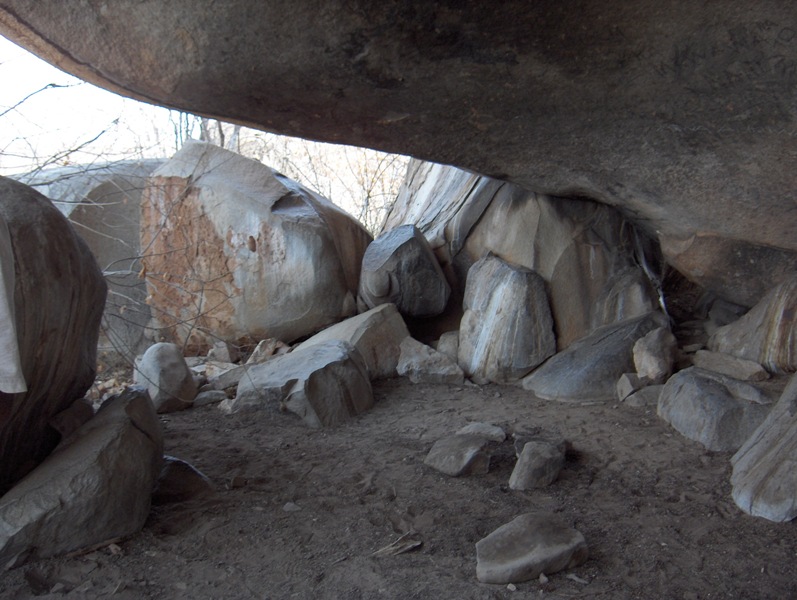
Mapango, or just Pango, are rock shelters. These posts chronicle my experiences in a granite pango in southern Tanzania, as well as other hijinks from the field.

About Me
- Ebeth
- My name is Elizabeth and I'm an archaeologist. I'm also a palaeoanthropologist, a bioarchaeologist, and a physical anthropologist, depending on the day. I'm spending the summer excavating bones (and other treasures) from an archaeological site in Tanzania. Otherwise, I'm a typical graduate student who enjoys coffee, reality television, and long walks on the beach.
No comments:
Post a Comment