Today was an interesting day at the site. First of all, we had excellent company all day long. About mid-morning, 3 little Maasai boys came to watch us dig while eating candy they eagerly accepted from my supervisor. They were supposed to be looking after some nearby goats, so they brought their puppy who quickly became engrossed in the archaeology. He carefully pawed around our excavation units, inspecting and sniffing each one and then moving on. He was also rather fond of flagging tape. Unfortunately, soon after the goats ran off and so did our new our friends. This afternoon, we were joined by a beautiful Maasai woman and her 3 young children, all dressed up in traditional beads and clothing. They sat down next to a karai and started helping us sort artifacts, just like 2 other local Wahehe men who have been coming to the site for the past few days. I was a little hesitant when local people first started getting actively involved in our excavation. Archaeology is tricky business because a site can only ever be excavated once, and any data that is lost in the process is gone forever. Consequently, I was a little woebegone to relinquish control of my bones to any non-archaeologists. However, my opinion has completely changed. After I showed the Maasai family what kind of artifacts we were looking for (stone tools, iron and iron slag, pottery, bone, beads, and shell), they quickly began passing me handfuls of artifacts to sort into their appropriate bags. Years of picking pebbles out of rice made this Maasai woman the most efficient sorter I have ever seen. She handed me grain-sized fragments of iron and bone while her kids made a game out of who could find the most artifacts in the screen. I have never seen a quadrant so effectively analysed in my entire life. Maasai make mean archaeologists!
Secondly, it appears we have located the initial test unit at the site that was excavated by a Tanzanian researcher in 2002. What we originally thought were a series of rodent burrows in the northwest and southwest quadrants of one of the units imploded into a large sink hole just before lunch. The sediments had been pretty unconsolidated all along, but we kept finding artifacts in every level which lead us to believe we weren’t digging in the same spot. However, he must have only collected a representative sample because we are definitely in his unit. We even found some modern paper he must have left a barrier. This is an important step in determining why we were pulling what look like Later Stone Age human remains out of the first few centimetres of this unit. They consist of badly damaged carpals and phalanges, which could have been easily missed by a non-osteologist. We’re almost ready to open up another 3 units, which should shed even more light onto what happened at this site, and any disturbances that are still going on (I’m looking at you, hyrax). Slowly but surely, this pango is giving up its secrets.
This morning on the way to the site, we drove by an old farmer who looked just like an African version of my grandfather who passed away last summer (that is, before he got sick). He was wearing a blue plaid shirt and a trucker hat, and smiled at me the same way my grandfather used to. This isn’t the first time I’ve felt like someone or something is watching over us and this project. Like I said, today was an interesting day.
skip to main |
skip to sidebar
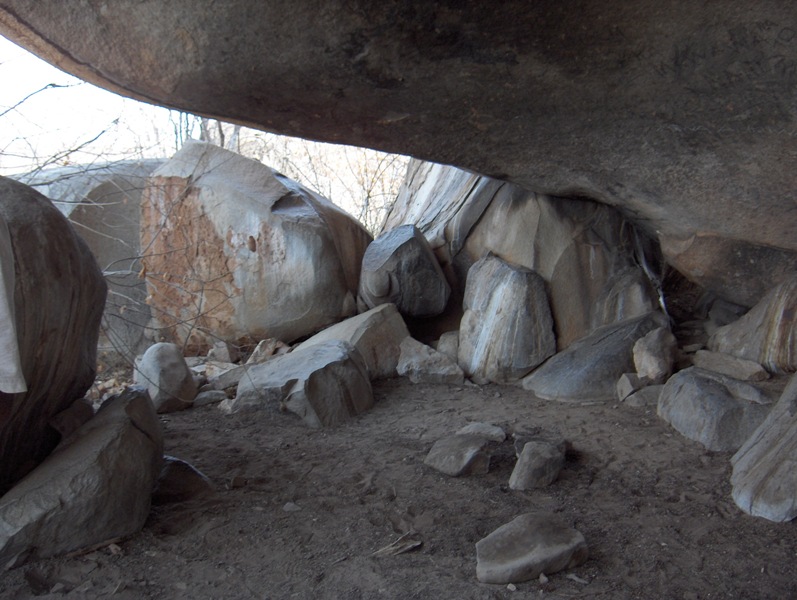
Mapango, or just Pango, are rock shelters. These posts chronicle my experiences in a granite pango in southern Tanzania, as well as other hijinks from the field.

About Me
- Ebeth
- My name is Elizabeth and I'm an archaeologist. I'm also a palaeoanthropologist, a bioarchaeologist, and a physical anthropologist, depending on the day. I'm spending the summer excavating bones (and other treasures) from an archaeological site in Tanzania. Otherwise, I'm a typical graduate student who enjoys coffee, reality television, and long walks on the beach.
No comments:
Post a Comment