It's great to be home! Our marathon return journey took us through four continents, four countries, and four airports. The whole thing lasted about 33 hours, 22 of which we spent in the air. I wanted to sleep, but between excitement, nervousness, and a whole lot of caffeine, it was not to be. After I successfully cleared customs and retrieved my bags in Edmonton (two major feats in my opinion), I walked out of the gate to a full entourage. My parents, boyfriend, sister, brother-in-law, and brother-in-law's brother (shall we just call him another brother-in-law?) were all waiting for me! I had planned to go home and pass out, but instead I was cajoled straight into a pizza party. I think it probably helped with the jet lag because I was exhausted by the time I finally went to bed. I had terrible jet lag in England at the beginning of our trip, so I was anticipating another go of it. However, the pizza appears to have saved me from that fate. Let this be a lesson to all world travellers: pizza first, then sleep.
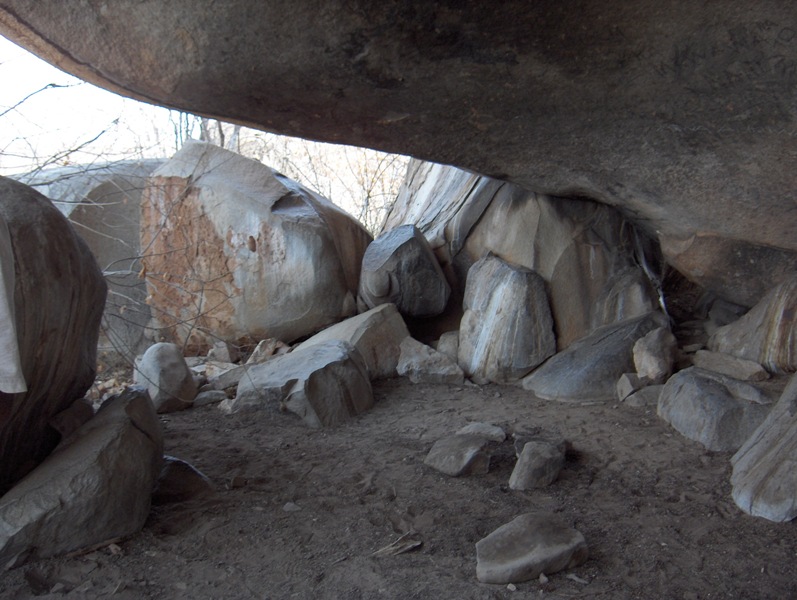
Since I arrived, I've been living in a whirlwind of family, friends, and unpacking. I have plans to continue this mini-vacation through the weekend, but unfortunately I'll be back to work on Monday. Our artifacts arrived at our lab yesterday and no matter how much I try to put them out of my mind, I know they're in there, waiting for me. This summer's excavation may have been one of the hardest thing I've ever done in my life, but the work is far from over. In just under two months, I have to return to Africa to present my preliminary results at a conference in Dakar, Senegal. To get to that point, the bones have to be unpacked, identified, catalogued, and photographed, and I have to cobble together my osteobiographies. I also have to select and send out samples for radiocarbon dating. If anything, this next step is going to be more intense than being in the field. If I'm lucky, I can stop and take a break sometime around Christmas.
Some of you might be wondering what's going to happen to this blog. Thanks to all of you that read it faithfully and shared my experiences in the field. I'm particularly happy that my family enjoyed it since I wrote it for them. However, the purpose of this blog was to chronicle our field season for my loved ones far away. Now that it's over, I plan to take a break from blogging. I will occassionally post on how my research is progressing, and I promise to highlight anything interesting that is revealed in the analysis phase. I also plan to attend conferences in Dakar, Sacramento, and Minneapolis this year, and will likely write about those travels. Until then, thanks for reading.
Thursday, September 2, 2010

Sunday, August 29, 2010
Day 73
Kwanza, hongera sana Tina na Ben! Happy one year anniversary! Last year on this date, I was the maid of honour at my sister’s wedding. This year, I’m going to leave Africa. All three flights combined are projected to take 21 hours and 55 minutes, which will be broken up by 11 or so hours of layovers. I sincerely hope your anniversary is more restful than my travel plans.
As our time in Africa was winding down, I spent some time thinking about this trip and what I’ve learned from it. If I had to summarize this experience, I would say that I’m walking away with three valuable lessons.
3. I am rich.
I’ll admit that before I came to Tanzania, I had a poor attitude about my financial position in the world. After Ben and I finished our undergraduate degrees, we each worked for a year to save money for grad school. After the year was over, we faced a difficult readjustment to a student lifestyle with no paycheque. Frankly speaking, our annual income is comprised of scholarships, student loans, charity, and whatever we scrounge up after working for the summer. Close to 40% of that goes to our tuition. Because I was away conducting research this summer, that number might be greater now. As much as we love being students and are grateful for the opportunity, it is without question a sacrifice. While other twenty-somethings are getting married, buying cars and houses, having children, and saving for retirement, we’re borrowing money against future careers which are by no means certain. When I think about the 5 years of university we’ve already completed and the 2-6 we still have left to achieve our goals, I am overwhelmed. Although I’ve been lucky with funding and we have wonderful and supportive families, negotiating a two-student partnership is no easy task.
My time in Tanzania has fully absolved me of my financial stress. What I perceived as sacrifices and hardships before are a joke compared to the conditions that people regularly live in here. First and foremost, I now understand that education is a privilege and not a right. Less than ten years ago in Tanzania, there was only one university with a total of 4000 student spaces. By comparison, our university is one of several just in the province and has about 37,000 students. Given that Dar es Salaam is a city of 4.5 million and Tanzania has a population the size of Canada, only a select few Tanzanians could do what most high school students take for granted. That Ben and I can make and pay for the choice to pursue multiple university degrees already puts us on a whole other level. To this blessing I add the countless other luxuries in my life: my car, my apartment, my 20+ pairs of shoes, my large television, my coffee maker AND espresso machine, my laptop, my phone, etc. I have never been in the position where I couldn’t afford to eat, or even couldn’t afford to eat on campus when I forgot my lunch. In fact, I have never been hungry or thirsty in my life save for the times I was too forgetful or lazy to eat. I have a safe home, good healthcare, and all the other basic necessities of life. If you knew how many people don’t have any of these things, you may think differently about your lot in life as well. I am a rich woman. Knowing that eliminates a burden I didn’t even know I was carrying, and makes me want to do more with what I have.
2. There is such a thing as a calling, and I’ve found mine.
Right before her first field season in Tanzania, Katie met a colleague at an African Archaeological conference who asked her how it was working here. When Katie admitted she had yet to go, the colleague warned her that she would either make a connection with Africa or never return, and her decision would be reflected in whether she attended the next conference. This is said about archaeological field work in general, but I think it’s especially true in Africa. There is something about being part of life here that either gets under a person’s skin or makes them turn around and run home. For me, it’s so far under my skin that I’m not sure where I stop and it begins. I was actually accepted to two universities for my MA, and the project I declined would have taken me to a Middle Palaeolithic site in the Middle East. When I was making my decision between Jordan and Tanzania, one that was likely to affect my career trajectory, it was hard to ignore the feeling deep down that I should just pick Africa. I really didn’t know much about it at the time other than what I had learned through books, movies, and in a handful of classes. Now that I have been here, I can’t imagine doing research anywhere else. In fact, I have an alarmingly clear picture of what I want to do for my next degree and any subsequent work after that. Whether I’m able to manoeuvre my way into doing Stone Age bioarchaeology in East Africa is a completely different matter, but I’m sure going to try. I’ve known I want to be an anthropologist for a long time now. However, this summer has given me a whole new degree of clarity regarding what I’m good at, what will make me happy, and how I should spend my life. The feeling is comically similar to the one that struck me one day when Ben and I first starting dating; a sudden realization that “oh, looks like this is it.” Not exactly what I would call fireworks and fanfare, but rather an insight that compels you to reorganize your whole future. It doesn’t mean the path to get there will be easy, but at least you can clearly see where you’re going. And that’s a good feeling.
1. In the end, it’s all about love.
The key to happiness is probably the worst-kept secret in the entire world. It’s in every pop song, cheesy movie, and greeting card. It’s dragged out and packaged several times a year during major holiday seasons. Hugh Grant has made a career out of it. And yet no one seems to believe that all you really need is love. While I was going through my successive waves of rotten culture shock, something that always bothered me was how people who have next to nothing can always be in such good spirits. Tanzania has some of the most vivacious and animated people I have ever met. Kids without shoes ran after our car waving every single day. The Maasai women who would come help us sort would always have a smile and joke to offer. Our two workers, Thomas and Suleiman, somehow managed to camp outside the rock shelter for multiple nights and were still able to greet us warmly in the morning. And then there are the people who, despite our white skin and the money they know we spent to get here, still greet us on the street every day. How can some people, whose circumstances should make them miserable, be so cheerful? Well here it is: there’s more to life than money and things. In Tanzania, family is a higher priority that almost anything else. Children equal fortune, and large extended families often live together under the same roof. In the rural areas, entire villages literally do raise a child. Hardship unquestionably exists, but so does a fierce love of life. So even if a man doesn’t have wealth, privilege, education, or status, he very well might still be jolly as long as he’s surrounded by the people he loves. In the end, it's all that matters. I’m sorry it took me 24 years to really learn this lesson, but better late than never. I think it’s safe to say I am a better person for having been to Africa.
As our time in Africa was winding down, I spent some time thinking about this trip and what I’ve learned from it. If I had to summarize this experience, I would say that I’m walking away with three valuable lessons.
3. I am rich.
I’ll admit that before I came to Tanzania, I had a poor attitude about my financial position in the world. After Ben and I finished our undergraduate degrees, we each worked for a year to save money for grad school. After the year was over, we faced a difficult readjustment to a student lifestyle with no paycheque. Frankly speaking, our annual income is comprised of scholarships, student loans, charity, and whatever we scrounge up after working for the summer. Close to 40% of that goes to our tuition. Because I was away conducting research this summer, that number might be greater now. As much as we love being students and are grateful for the opportunity, it is without question a sacrifice. While other twenty-somethings are getting married, buying cars and houses, having children, and saving for retirement, we’re borrowing money against future careers which are by no means certain. When I think about the 5 years of university we’ve already completed and the 2-6 we still have left to achieve our goals, I am overwhelmed. Although I’ve been lucky with funding and we have wonderful and supportive families, negotiating a two-student partnership is no easy task.
My time in Tanzania has fully absolved me of my financial stress. What I perceived as sacrifices and hardships before are a joke compared to the conditions that people regularly live in here. First and foremost, I now understand that education is a privilege and not a right. Less than ten years ago in Tanzania, there was only one university with a total of 4000 student spaces. By comparison, our university is one of several just in the province and has about 37,000 students. Given that Dar es Salaam is a city of 4.5 million and Tanzania has a population the size of Canada, only a select few Tanzanians could do what most high school students take for granted. That Ben and I can make and pay for the choice to pursue multiple university degrees already puts us on a whole other level. To this blessing I add the countless other luxuries in my life: my car, my apartment, my 20+ pairs of shoes, my large television, my coffee maker AND espresso machine, my laptop, my phone, etc. I have never been in the position where I couldn’t afford to eat, or even couldn’t afford to eat on campus when I forgot my lunch. In fact, I have never been hungry or thirsty in my life save for the times I was too forgetful or lazy to eat. I have a safe home, good healthcare, and all the other basic necessities of life. If you knew how many people don’t have any of these things, you may think differently about your lot in life as well. I am a rich woman. Knowing that eliminates a burden I didn’t even know I was carrying, and makes me want to do more with what I have.
2. There is such a thing as a calling, and I’ve found mine.
Right before her first field season in Tanzania, Katie met a colleague at an African Archaeological conference who asked her how it was working here. When Katie admitted she had yet to go, the colleague warned her that she would either make a connection with Africa or never return, and her decision would be reflected in whether she attended the next conference. This is said about archaeological field work in general, but I think it’s especially true in Africa. There is something about being part of life here that either gets under a person’s skin or makes them turn around and run home. For me, it’s so far under my skin that I’m not sure where I stop and it begins. I was actually accepted to two universities for my MA, and the project I declined would have taken me to a Middle Palaeolithic site in the Middle East. When I was making my decision between Jordan and Tanzania, one that was likely to affect my career trajectory, it was hard to ignore the feeling deep down that I should just pick Africa. I really didn’t know much about it at the time other than what I had learned through books, movies, and in a handful of classes. Now that I have been here, I can’t imagine doing research anywhere else. In fact, I have an alarmingly clear picture of what I want to do for my next degree and any subsequent work after that. Whether I’m able to manoeuvre my way into doing Stone Age bioarchaeology in East Africa is a completely different matter, but I’m sure going to try. I’ve known I want to be an anthropologist for a long time now. However, this summer has given me a whole new degree of clarity regarding what I’m good at, what will make me happy, and how I should spend my life. The feeling is comically similar to the one that struck me one day when Ben and I first starting dating; a sudden realization that “oh, looks like this is it.” Not exactly what I would call fireworks and fanfare, but rather an insight that compels you to reorganize your whole future. It doesn’t mean the path to get there will be easy, but at least you can clearly see where you’re going. And that’s a good feeling.
1. In the end, it’s all about love.
The key to happiness is probably the worst-kept secret in the entire world. It’s in every pop song, cheesy movie, and greeting card. It’s dragged out and packaged several times a year during major holiday seasons. Hugh Grant has made a career out of it. And yet no one seems to believe that all you really need is love. While I was going through my successive waves of rotten culture shock, something that always bothered me was how people who have next to nothing can always be in such good spirits. Tanzania has some of the most vivacious and animated people I have ever met. Kids without shoes ran after our car waving every single day. The Maasai women who would come help us sort would always have a smile and joke to offer. Our two workers, Thomas and Suleiman, somehow managed to camp outside the rock shelter for multiple nights and were still able to greet us warmly in the morning. And then there are the people who, despite our white skin and the money they know we spent to get here, still greet us on the street every day. How can some people, whose circumstances should make them miserable, be so cheerful? Well here it is: there’s more to life than money and things. In Tanzania, family is a higher priority that almost anything else. Children equal fortune, and large extended families often live together under the same roof. In the rural areas, entire villages literally do raise a child. Hardship unquestionably exists, but so does a fierce love of life. So even if a man doesn’t have wealth, privilege, education, or status, he very well might still be jolly as long as he’s surrounded by the people he loves. In the end, it's all that matters. I’m sorry it took me 24 years to really learn this lesson, but better late than never. I think it’s safe to say I am a better person for having been to Africa.
Saturday, August 28, 2010
Day 72
We are officially in our last 24 hours in Tanzania. The last four days of this trip are a slow denouement to our departure tomorrow afternoon. As you have read, the transition from frenzied excavation to backfilling, artifact packing, and leaving Iringa all happened within the span of 72 hours. After we reached Dar es Salaam, it took another 72 hours to excitedly find human remains, acquire the necessary permits, and have them shipped. As of yesterday, our artifacts had already been through London and were en route to their next destination outside Toronto. By now they’re probably zooming across the prairies, well in advance of their curators. So after an exciting and fast-paced field season, we are left at the end with absolutely nothing to do. Since Thursday, we’ve been wandering around Dar es Salaam motivated entirely by fancy. We’ve been drinking an absurd amount of coffee, floating in and out of shops, and visiting all the biggest tourist hubs and shopping malls. We buy things when they catch our attention, like the saucer-sized chocolate sprinkle donuts at a bakery this morning. Basically, we are in ultimate vacation mode right now. We all have things we probably should be doing, like preparing to teach classes and labs, writing abstracts, and preparing grant proposals, but I personally would rather just coast over the finish line. This coming academic year holds the promise of back-breaking work, so why not enjoy the last of our freedom? And if having nothing to do in Dar es Salaam is the cost of freedom, so be it.
The only thing that threatens our zen-like state is the prospect of packing. We were so pleasantly sedentary this trip that I’d nearly forgotten the pain of packing. Jenn and I managed to make respectable progress yesterday afternoon, but the looming responsibility of stowing the rest is utterly off putting. Now that I am one field season wiser, I can conclusively say that I packed far too much to come here. Although I’ve culled some of my original possessions, my souvenir haul far exceeds the freed up space. Furthermore, I seem to have picked up even more stuff while whimsically touring the city over the past few days. Without the constant pressure of work, I gave in and had too much fun. I can already tell that my Tetris skills are going to be tested.
The only thing that threatens our zen-like state is the prospect of packing. We were so pleasantly sedentary this trip that I’d nearly forgotten the pain of packing. Jenn and I managed to make respectable progress yesterday afternoon, but the looming responsibility of stowing the rest is utterly off putting. Now that I am one field season wiser, I can conclusively say that I packed far too much to come here. Although I’ve culled some of my original possessions, my souvenir haul far exceeds the freed up space. Furthermore, I seem to have picked up even more stuff while whimsically touring the city over the past few days. Without the constant pressure of work, I gave in and had too much fun. I can already tell that my Tetris skills are going to be tested.
Friday, August 27, 2010
Day 71
It’s high time I talked about the Jambo Inn considering it’s where we eat dinner 5 or 6 times a week when we’re in Dar es Salaam. The Jambo Inn is the gregarious backpackers’ hostel right around the corner from the Starlight.  Although the rooms at our hotel are slightly nicer, the Jambo Inn is vastly superior in terms of food. We first started going there for the Internet Cafe, but continued long after we acquired mobile internet sticks for the eats. First of all, it has an absolutely gigantic menu. If you don’t believe me, see for yourself! You can get almost anything there including 20 or 30 different types of curry, Chinese food, a variety of different soups, beef/chicken/veggie burgers, and a half dozen types of fries. The restaurant also boasts fresh juices, including lemon, orange, pineapple, passion, mango, and watermelon. The watermelon juice in particular would give anyone one good reason to go on living. I might just reconnect with my own juicer because of it. Although we’ve made a good effort to sample all the menu items, to do so would take far longer than this field season would allow. Of the things we’ve tried, we each have our favourites. Katie likes the daal makhani and the navratan curry, Jenn likes the barbeque chicken, Pam loves the fried rice and the chicken with chips, and I’m a sucker for the hot and sour soup and cheeseburgers. However there is more than enough choice to keep us coming back for dinner almost every night of the week. Since the Inn is Muslim run, lately we’ve also had the choice of Ramadan feast dishes. I can highly recommend the chicken thaali.
 In addition to the stellar food and wide selection, the Jambo Inn has a number of endearing quirks. The restaurant is randomly closed on Wednesdays. You can get various packaged ice cream treats, foreign chocolate bars, and various types of candy from the counter beside the internet cafe. The ceiling is painted with different types of panoramic landscapes, including Niagara Falls and the Grand Canyon. The tables are all either yellow, red, green, or blue with matching chairs. There are cheesy motivation quotes on the walls painted in Disney-esque script. Sometimes when we ask for a receipt after dinner, they randomly up the bill another 18%. It’s the only place in Dar es Salaam to get ginger ale, which looks like Canada Dry except all the writing is in Arabic. Finally, the patrons of the Jambo Inn are a colourful bunch. They represent the best mix of eccentric backpackers, college students, and businessmen. For the past few nights, a group of very attractive young women in harem pants and hoop earrings have been there playing SkipBo. Seriously, SkipBo of all things. We certainly never find ourselves short of people watching opportunities. At some point during this field season, a series of places and things in Tanzania became a part of our daily life. I can’t remember when we first went to the Jambo Inn to eat, but it’s since become an integral part of our routine. We’ve been regulars there for the past two months, and will be up until we leave the day after tomorrow.
 Although the rooms at our hotel are slightly nicer, the Jambo Inn is vastly superior in terms of food. We first started going there for the Internet Cafe, but continued long after we acquired mobile internet sticks for the eats. First of all, it has an absolutely gigantic menu. If you don’t believe me, see for yourself! You can get almost anything there including 20 or 30 different types of curry, Chinese food, a variety of different soups, beef/chicken/veggie burgers, and a half dozen types of fries. The restaurant also boasts fresh juices, including lemon, orange, pineapple, passion, mango, and watermelon. The watermelon juice in particular would give anyone one good reason to go on living. I might just reconnect with my own juicer because of it. Although we’ve made a good effort to sample all the menu items, to do so would take far longer than this field season would allow. Of the things we’ve tried, we each have our favourites. Katie likes the daal makhani and the navratan curry, Jenn likes the barbeque chicken, Pam loves the fried rice and the chicken with chips, and I’m a sucker for the hot and sour soup and cheeseburgers. However there is more than enough choice to keep us coming back for dinner almost every night of the week. Since the Inn is Muslim run, lately we’ve also had the choice of Ramadan feast dishes. I can highly recommend the chicken thaali.
  In addition to the stellar food and wide selection, the Jambo Inn has a number of endearing quirks. The restaurant is randomly closed on Wednesdays. You can get various packaged ice cream treats, foreign chocolate bars, and various types of candy from the counter beside the internet cafe. The ceiling is painted with different types of panoramic landscapes, including Niagara Falls and the Grand Canyon. The tables are all either yellow, red, green, or blue with matching chairs. There are cheesy motivation quotes on the walls painted in Disney-esque script. Sometimes when we ask for a receipt after dinner, they randomly up the bill another 18%. It’s the only place in Dar es Salaam to get ginger ale, which looks like Canada Dry except all the writing is in Arabic. Finally, the patrons of the Jambo Inn are a colourful bunch. They represent the best mix of eccentric backpackers, college students, and businessmen. For the past few nights, a group of very attractive young women in harem pants and hoop earrings have been there playing SkipBo. Seriously, SkipBo of all things. We certainly never find ourselves short of people watching opportunities. At some point during this field season, a series of places and things in Tanzania became a part of our daily life. I can’t remember when we first went to the Jambo Inn to eat, but it’s since become an integral part of our routine. We’ve been regulars there for the past two months, and will be up until we leave the day after tomorrow.
Thursday, August 26, 2010
Day 70
I planned to write about how today, three days before we’re scheduled to leave Africa, we finally acquired mosquito nets to sleep under at the Starlight Hotel. It’s a long and complicated story that involves misconceptions about air conditioners, cultural incomprehensibility, and a vicious flea attack. However, my roommate Jennifer has advised me to talk about something more positive, so you’ll just have to believe me when I say the nets were long overdue and we’re very happy. In other news, here are the top 5 things I’m going to miss about Tanzania.
5. The call to prayer
Before coming to Tanzania, I had heard calls to prayer in two other countries: Turkey and Morocco. However, I was in those countries for an absurdly short amount of time and could not appreciate their beauty and regularity. In Dar es Salaam, we clearly hear the call to prayer 5 times a day like clockwork. We also heard it in Iringa, but usually only first thing in the morning since we were so far from the mosque. From a functional perspective, they are a great way to mark time without wearing a watch. However, there is also something so hauntingly beautiful about hearing prayers sung high above the city. I like to listen to them first thing in the morning and just think about the day to come. I may not be Muslim, I do feel as though they add something special to my day, and I know I’ll miss them when they’re suddenly gone.
4. The pace of life
Granted, the “no hurry in Africa” philosophy occasionally drives me insane. Everywhere we go, we seem to wait around. This was especially true this week when we were seeking permission to export. Sometimes we waited for hours for a single signature. However, the pace of life here also has its advantages. There is never anyone waiting impatiently behind you when you pay in change in a checkout line. Few people push past you on the side-walk and cars often break when they see a pedestrian trying to cross. The city still continues to function, but people are in much less of a hurry to get somewhere. As someone who is perpetually late, I find this incredibly pleasant. It’s as though the high stress, frantic aspect of your typical North American city is absent. This was even more so the case in Iringa where literally everyone moved on their own time. It’s possible that there’s a correlation between the relaxed pace of life here and the total lack of Starbucks. I’m not saying that we don’t experience pressure in Tanzania, but it feels nice not to be constantly rushing around. Like I said, no hurry in Africa.
3. The team
This item makes it onto the list because this trip really wouldn’t have been the same without them, particularly Katie and Jennifer. At first it was really difficult to get used to living with other people 24/7. However, now I’m convinced I’m going to miss it. The anecdotes, conversations, inside jokes, and pranks got us through the toughest times of the field season. Whenever I was affected by what was going on around us, or something didn’t seem right, I could look over and know that they were thinking the same thing. When obstacles arose, we had each other`s backs. And when one of us was going through something, the others were always around to listen (whether they liked it or not). One of my favourite parts of the excavation was right when Jenn and I walked through the door of our hotel room at the end of the day. We would just talk about the little things that happened at the site that day, both good and bad, and clear our minds for the rest of the night. I once had a boss named Leslie who subscribed to what she called “the summer camp theory of friendship.” When people go through an intense experience where they are living and working together (a dig, training, war, summer camp, etc), they will either become friends forever or never see each other again. I can’t think of a better way to explain what’s happened here. Life experiences are always shaped by the people around you, and so my time in Tanzania is all bound up with the people I spent it with. I’m going to miss all of that when I go home.
2. Greetings
Something that really distinguishes Tanzania from everywhere else I’ve been is the practice of constant daily greetings. It’s cultural policy here to greet almost everyone you run into, whether you enter into a genuine conversation or are just passing them on the street. There are also about a million different ways to greet someone. The go-to phrase is usually some form of “Habari (za)...” (news of...) with just about anything you want on the end. Habari yako (how are you)? Habari za kuamka (how was the getting up)? Habari za mchana (how’s the afternoon)? Habari za gari (how’s the car)? Habari za mbwa mkali (how’s the mad dog)? Habari za matatizo wa ng’ombe (how’s the cow problem)? It seems to work for everything, even if we do get a little carried away with creating our own greetings. To be honest, sometimes we are greeted so often on the street that we just pretend not to understand Kiswahili. Part of this is definitely related to being white. By this point, we’re pretty used to standing out in the crowd. People definitely tend to greet us because they recognize us as different, and that’s not always a bad thing. Today an old man who passed us on the street said, in perfect English, “Welcome to Tanzania.” I wanted to respond “we’ve been here for 70 days!” but that’s not important. Greetings are simply woven into the fabric of daily life. I imagine it will be strange to go back to Canada where you really don’t have any contact with people on the street, and where we will just be more white people in a city of 500,000 others. There is a loss of intimacy ahead that is probably going to bring sadness as well as relief.
1. Being in the thick of things
Don’t get me wrong, I love my home town. Considering I’ve lived there for my entire life, I probably even love it more than most. However, when it really comes down to it, I’m just not an Alberta archaeologist. The time I’ve spent here has really solidified my research interests in East Africa. There’s something about being here that is so ineffably exciting. It feels like there is more history for me here than anywhere else I’ve ever been. I think people who move from North America to Europe must feel the same way – that there is another level of culture and time depth all around them. I think this last point will have to remain the least explained out of the bunch because it’s just based on a feeling I get. It’s the same sensation that makes me want to return here as many times as possible over the course of my life. It’s hard to explain, but it feels like there’s something I’m supposed to do in this part of the world. So at the end of this list, the thing I will miss most about Tanzania is in fact Tanzania. There’s no better way to put it, so I think I’ll leave it at just that. I will miss Tanzania.
5. The call to prayer
Before coming to Tanzania, I had heard calls to prayer in two other countries: Turkey and Morocco. However, I was in those countries for an absurdly short amount of time and could not appreciate their beauty and regularity. In Dar es Salaam, we clearly hear the call to prayer 5 times a day like clockwork. We also heard it in Iringa, but usually only first thing in the morning since we were so far from the mosque. From a functional perspective, they are a great way to mark time without wearing a watch. However, there is also something so hauntingly beautiful about hearing prayers sung high above the city. I like to listen to them first thing in the morning and just think about the day to come. I may not be Muslim, I do feel as though they add something special to my day, and I know I’ll miss them when they’re suddenly gone.
4. The pace of life
Granted, the “no hurry in Africa” philosophy occasionally drives me insane. Everywhere we go, we seem to wait around. This was especially true this week when we were seeking permission to export. Sometimes we waited for hours for a single signature. However, the pace of life here also has its advantages. There is never anyone waiting impatiently behind you when you pay in change in a checkout line. Few people push past you on the side-walk and cars often break when they see a pedestrian trying to cross. The city still continues to function, but people are in much less of a hurry to get somewhere. As someone who is perpetually late, I find this incredibly pleasant. It’s as though the high stress, frantic aspect of your typical North American city is absent. This was even more so the case in Iringa where literally everyone moved on their own time. It’s possible that there’s a correlation between the relaxed pace of life here and the total lack of Starbucks. I’m not saying that we don’t experience pressure in Tanzania, but it feels nice not to be constantly rushing around. Like I said, no hurry in Africa.
3. The team
This item makes it onto the list because this trip really wouldn’t have been the same without them, particularly Katie and Jennifer. At first it was really difficult to get used to living with other people 24/7. However, now I’m convinced I’m going to miss it. The anecdotes, conversations, inside jokes, and pranks got us through the toughest times of the field season. Whenever I was affected by what was going on around us, or something didn’t seem right, I could look over and know that they were thinking the same thing. When obstacles arose, we had each other`s backs. And when one of us was going through something, the others were always around to listen (whether they liked it or not). One of my favourite parts of the excavation was right when Jenn and I walked through the door of our hotel room at the end of the day. We would just talk about the little things that happened at the site that day, both good and bad, and clear our minds for the rest of the night. I once had a boss named Leslie who subscribed to what she called “the summer camp theory of friendship.” When people go through an intense experience where they are living and working together (a dig, training, war, summer camp, etc), they will either become friends forever or never see each other again. I can’t think of a better way to explain what’s happened here. Life experiences are always shaped by the people around you, and so my time in Tanzania is all bound up with the people I spent it with. I’m going to miss all of that when I go home.
2. Greetings
Something that really distinguishes Tanzania from everywhere else I’ve been is the practice of constant daily greetings. It’s cultural policy here to greet almost everyone you run into, whether you enter into a genuine conversation or are just passing them on the street. There are also about a million different ways to greet someone. The go-to phrase is usually some form of “Habari (za)...” (news of...) with just about anything you want on the end. Habari yako (how are you)? Habari za kuamka (how was the getting up)? Habari za mchana (how’s the afternoon)? Habari za gari (how’s the car)? Habari za mbwa mkali (how’s the mad dog)? Habari za matatizo wa ng’ombe (how’s the cow problem)? It seems to work for everything, even if we do get a little carried away with creating our own greetings. To be honest, sometimes we are greeted so often on the street that we just pretend not to understand Kiswahili. Part of this is definitely related to being white. By this point, we’re pretty used to standing out in the crowd. People definitely tend to greet us because they recognize us as different, and that’s not always a bad thing. Today an old man who passed us on the street said, in perfect English, “Welcome to Tanzania.” I wanted to respond “we’ve been here for 70 days!” but that’s not important. Greetings are simply woven into the fabric of daily life. I imagine it will be strange to go back to Canada where you really don’t have any contact with people on the street, and where we will just be more white people in a city of 500,000 others. There is a loss of intimacy ahead that is probably going to bring sadness as well as relief.
1. Being in the thick of things
Don’t get me wrong, I love my home town. Considering I’ve lived there for my entire life, I probably even love it more than most. However, when it really comes down to it, I’m just not an Alberta archaeologist. The time I’ve spent here has really solidified my research interests in East Africa. There’s something about being here that is so ineffably exciting. It feels like there is more history for me here than anywhere else I’ve ever been. I think people who move from North America to Europe must feel the same way – that there is another level of culture and time depth all around them. I think this last point will have to remain the least explained out of the bunch because it’s just based on a feeling I get. It’s the same sensation that makes me want to return here as many times as possible over the course of my life. It’s hard to explain, but it feels like there’s something I’m supposed to do in this part of the world. So at the end of this list, the thing I will miss most about Tanzania is in fact Tanzania. There’s no better way to put it, so I think I’ll leave it at just that. I will miss Tanzania.
Wednesday, August 25, 2010
Day 69
Folks, we have a winner: day 69 was officially the longest day of this field season. We went to the museum for the third straight morning in a row to pick up our letter of permission for export. Within minutes, it was in Pam’s hot little hands and we were marching single file to the storage facility to pick up the bones in question. After I double, triple (and perhaps even quadruple) checked that I had everything I needed, the manager of the museum filled out the appropriate loan forms and we strode out the front gate, treasures in hand. Who knew it would be so easy? I’m indebted to the National Museum of Tanzania for listening to my ideas and accommodating my request. Thanks to the efforts of staff there, I will be able to bring together individuals that were collected from the same site in three separate excavations over 8 years. I might be biased, but I think that’s pretty cool.
After our morning victory, the day slowed down considerably. We waited around antiquities for over an hour for a single signature on our export permit. After that, we drove to the Nyrere Museum to pick up the boxes of artifacts we collected from the field this summer. Pastory, Anthony, and Mabulla dropped them off there last Friday on their way into Dar es Salaam. Following a quick count and some heavy lifting, it was off to the Ministry of Energy and Mines (also known as Madini) to have our rocks appraised as worthless. Even though they are archaeological samples, it’s policy to have all rock samples inspected before export to cut down on illegal mining. It should have been a relatively straightforward operation, but we ended up sitting on a concrete girder in the parking lot for several hours while Pam and Pastory tried to plead our case. Three separate officials came to look in our boxes of quartzite debitage stored in clear plastic bags. After more than a little red tape, we were finally able to have the boxes checked and sealed with packing tape, white string, and sealing wax. Around 4 pm, we reached our final destination: the shipping office. We unloaded the boxes from the car for the third and final time, helped weigh and organize them, and paid about 4 million shillings to have them sent to Canada.
All that sitting around and waiting wouldn’t have been so bad except we had guests. Pastory’s daughter and niece spent the day with us, which made sitting around in (or outside) offices a real shame. Fortunately, hanging out with preteen girls can also make the time pass faster. Katie, Jenn, and I each got our hair done and participated in some pretty hilarious photo shoots. Also, after this long, long day of waiting around, we are officially done our business in Dar es Salaam. We have our export permits and our boxes are safely at the shipping company, awaiting departure. That means we can enjoy our last four days in Africa free of responsibility. Whether I actually believe that there is no more work to be done remains to be seen. Nevertheless, we are one step closer to home.
After our morning victory, the day slowed down considerably. We waited around antiquities for over an hour for a single signature on our export permit. After that, we drove to the Nyrere Museum to pick up the boxes of artifacts we collected from the field this summer. Pastory, Anthony, and Mabulla dropped them off there last Friday on their way into Dar es Salaam. Following a quick count and some heavy lifting, it was off to the Ministry of Energy and Mines (also known as Madini) to have our rocks appraised as worthless. Even though they are archaeological samples, it’s policy to have all rock samples inspected before export to cut down on illegal mining. It should have been a relatively straightforward operation, but we ended up sitting on a concrete girder in the parking lot for several hours while Pam and Pastory tried to plead our case. Three separate officials came to look in our boxes of quartzite debitage stored in clear plastic bags. After more than a little red tape, we were finally able to have the boxes checked and sealed with packing tape, white string, and sealing wax. Around 4 pm, we reached our final destination: the shipping office. We unloaded the boxes from the car for the third and final time, helped weigh and organize them, and paid about 4 million shillings to have them sent to Canada.
All that sitting around and waiting wouldn’t have been so bad except we had guests. Pastory’s daughter and niece spent the day with us, which made sitting around in (or outside) offices a real shame. Fortunately, hanging out with preteen girls can also make the time pass faster. Katie, Jenn, and I each got our hair done and participated in some pretty hilarious photo shoots. Also, after this long, long day of waiting around, we are officially done our business in Dar es Salaam. We have our export permits and our boxes are safely at the shipping company, awaiting departure. That means we can enjoy our last four days in Africa free of responsibility. Whether I actually believe that there is no more work to be done remains to be seen. Nevertheless, we are one step closer to home.
Tuesday, August 24, 2010
Day 68
First thing this morning, we went to the National Museum to hand deliver our formal request for loan and export. I was still feeling optimistic from our meeting with the director yesterday, but I couldn’t have predicted how well it actually went. Upon seeing us, the first thing he said was “permission granted!” Then he laid out some of his stipulations, which were all extremely reasonable and easy to accommodate. Once again, a task that I thought would be nearly impossible was accomplished without so much as a hiccup. What a strange world we live in. Or perhaps what a strange world I live in. I’m so burned out at this point that I probably can’t even worry in a reasonable fashion.
Tomorrow, we should be able to pick up both our export permits from the National Museum and the Antiquities Division, round up all our boxes of artifacts, and get down to the business of shipping. As I mentioned, we need clearance from the ministry of mines since a large percentage of our artifacts are rocks. An inspector will have to look over each box to ensure we’re exporting stone tools instead of gemstones. In preparation for this, Pam has bought string, lighters, and sealing wax, so I anticipate quite the show. If all goes according to plan, we will hopefully be able to ship our artifacts back to Canada ahead of ourselves. We might even have a few days in Dar es Salaam free of responsibility at the end of the week. Now we’re really in the final act of this show.
 In some bizarre foreshadowing event, we found a genuine mall in Dar es Salaam today. It was something straight out of a North American landscape. It all started with my request to return to the infamous Chicken Hut, a great little restaurant we ate at in our first week in Africa but never again since. After enjoying some sizzling stew and ugali, we decided to explore the shopping complex behind it. We thought it was just a ShopRite (a grocery store), but in fact it was an entire mall with jewellery, souvenir, and clothing stores, a cafe and food court, and a series of large department stores. Naturally, the first thing I did was get a cup of coffee. There was a store called Game which was a passable equivalent to Wal-Mart with some food, home wears, and even an aisle of Barbies. In ShopRite, we found aisles of familiar groceries alongside some new additions like African spices, mchuzi mix, and a formidable wall of Africafe. When we were in Iringa, we ate at the hotel every night and bought our lunch groceries from a large outdoor market in which unpackaged goods were piled high in a series of colourful pyramids. Now Dar is a considerably larger city than Iringa, but we still didn’t anticipate running across a Western-style supermarket. It was so much like being at home that it gave us reverse culture shock. I can’t even imagine what actually going home will be like. At least I got some more Red Bull out of the deal.
Tomorrow, we should be able to pick up both our export permits from the National Museum and the Antiquities Division, round up all our boxes of artifacts, and get down to the business of shipping. As I mentioned, we need clearance from the ministry of mines since a large percentage of our artifacts are rocks. An inspector will have to look over each box to ensure we’re exporting stone tools instead of gemstones. In preparation for this, Pam has bought string, lighters, and sealing wax, so I anticipate quite the show. If all goes according to plan, we will hopefully be able to ship our artifacts back to Canada ahead of ourselves. We might even have a few days in Dar es Salaam free of responsibility at the end of the week. Now we’re really in the final act of this show.
 In some bizarre foreshadowing event, we found a genuine mall in Dar es Salaam today. It was something straight out of a North American landscape. It all started with my request to return to the infamous Chicken Hut, a great little restaurant we ate at in our first week in Africa but never again since. After enjoying some sizzling stew and ugali, we decided to explore the shopping complex behind it. We thought it was just a ShopRite (a grocery store), but in fact it was an entire mall with jewellery, souvenir, and clothing stores, a cafe and food court, and a series of large department stores. Naturally, the first thing I did was get a cup of coffee. There was a store called Game which was a passable equivalent to Wal-Mart with some food, home wears, and even an aisle of Barbies. In ShopRite, we found aisles of familiar groceries alongside some new additions like African spices, mchuzi mix, and a formidable wall of Africafe. When we were in Iringa, we ate at the hotel every night and bought our lunch groceries from a large outdoor market in which unpackaged goods were piled high in a series of colourful pyramids. Now Dar is a considerably larger city than Iringa, but we still didn’t anticipate running across a Western-style supermarket. It was so much like being at home that it gave us reverse culture shock. I can’t even imagine what actually going home will be like. At least I got some more Red Bull out of the deal.
Subscribe to:
Comments (Atom)