Ben has pointed out that my posts are a bit one sided and optimistic. That’s mostly because I’m having a really great time here, but also because no one would read a complaints blog. However, in the pursuit of honest journalism, here is my list of the top 3 hardest things about being in this part of Africa.
3. Being white.
Do you ever get the feeling that people are talking about you in another language? Or that you have something on your face that’s causing everyone to stare? That’s the situation here, except the problem is the face itself. No matter how we dress or act, it’s impossible to blend in. In fact, we’re horrifically conspicuous everywhere we go. People point at us as we walk past. Perhaps this is what celebrities complain about? More than I hate sticking out, I hate what I imagine our white skin represents: wealth, privilege, arrogance, ignorance, and vulnerability. There seems to be a lot of baggage associated with our appearance over which we have absolutely no control. In this part of the world, we will always be outsiders.
2. Seeing all the hardship, everyday.
I use the word hardship because I’m referring to more than just poverty: we see poverty, disease, and all other sorts of misfortune. In Dar es Salaam, I realized that the disproportionally large number of lame people (where their legs are atrophied and twisted) must be polio survivors, a disease which no longer exists where we come from. I see frighteningly thin men, women, and children who must be suffering from malnutrition if not starvation. I also see a lot of physical deformities in adults (like club feet) that would almost always be treated in childhood in North America and Europe. I’m not talking about the majority of people, but enough that it’s impossible to ignore. The level of poverty increases from Dar es Salaam to the rural areas, where most people live in mud or wooden structures with no glass in the windows or proper doors. It looks as though electricity and running water are only available in some places and in some buildings, and medical centres are few and far between. Not everyone has clean water. People are hard working but it looks as though they can barely get by. In some places, it’s obvious that the villagers are completely destitute.
Anyone who has been to the third world and left unchanged is either lying or soulless. The grieving process that inevitably occurs when you’re exposed to this sort of thing is very personal and private, which can leave you feeling even more isolated and helpless. We are confronted by the realities of life on a daily basis, which leads me to two important questions. Why did we spend so much money to come here when those resources could be better used to help people who are hurting? Secondly, since we are already here, why are we chasing the past when the present could benefit from humanitarian aid?
I don’t really have answers to those questions. The only thing to do is remind myself that we are here to do a job, and that job is how we can benefit Tanzanians. It makes it easier when we see the overwhelming support and cooperation of local people, from government officials to Maasai herdsmen, for our archaeological project. Every day I wrap myself in my faith in this research. It’s important for me to believe that we’re not just exploring this site out of curiosity, but that understanding the origin and evolution of our species is vitally important to humankind.
1. Understanding that I don’t understand.
As anthropologists we strive for cultural relativism, which means that we don’t hierarchically organize societies as superior and inferior. Here’s the rub: if all cultures are equal, how can you tell what needs fixing and what is just different? How do I know that people want glass in their windows or more than one room in their house? How do I even know that that’s the property where they spend the majority of their time? Do subsistence farmers want more money, or would that throw off the entire local economy? Who needs air conditioning and hospital births when there are culturally-preferred ways to deliver cold air and babies? It really comes down to whether or not I am feeling sorry for people who already have a great quality of life, albeit one that is impossible for an ignorant westerner to recognize. The feeling of non-comprehension is worse than the feeling of guilt in many ways. It also exacerbates the feeling of being an outsider, because it’s painfully obvious that I don’t understand how the world works here. This country is an impenetrable fortress that I am permitted to walk through only because I see it through my harmless mzungu eyes.
And yet, there are always things that stand out as wrong, no matter how you spin them. I know that out of all those students in rural Iringa who want to go to university, only a handful will make it. And those were the children that could afford to go to school in the first place. I know that in order to acquire graduate degrees and become archaeologists, those kids will probably have to find employers or institutions to sponsor them. And I know that if any of those things happen, it will be much later in life than 24, the age at which I travelled halfway around the world to talk to them about archaeology.
Amidst all the amazing things we get to see and do every single day, these are the things that make it hard to be in Africa.
skip to main |
skip to sidebar
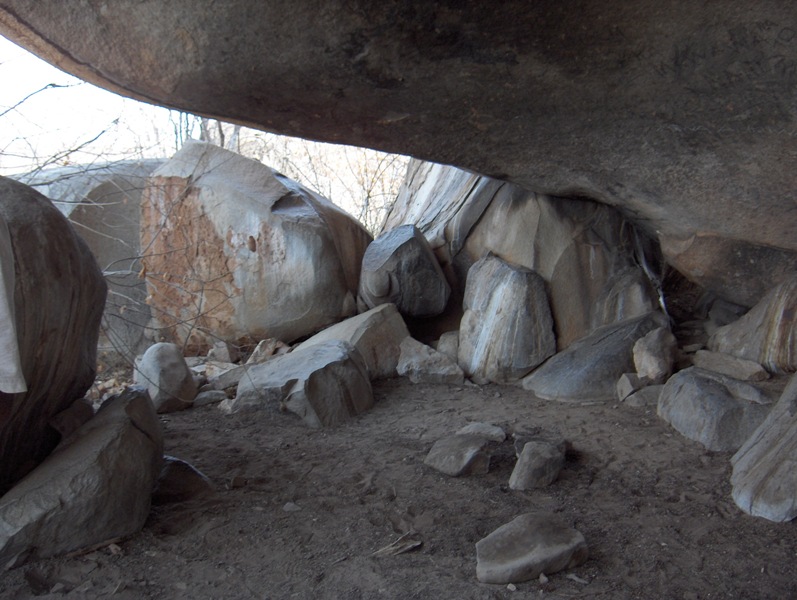
Mapango, or just Pango, are rock shelters. These posts chronicle my experiences in a granite pango in southern Tanzania, as well as other hijinks from the field.

About Me
- Ebeth
- My name is Elizabeth and I'm an archaeologist. I'm also a palaeoanthropologist, a bioarchaeologist, and a physical anthropologist, depending on the day. I'm spending the summer excavating bones (and other treasures) from an archaeological site in Tanzania. Otherwise, I'm a typical graduate student who enjoys coffee, reality television, and long walks on the beach.
No comments:
Post a Comment