Kwanza, hongera sana Tina na Ben! Happy one year anniversary! Last year on this date, I was the maid of honour at my sister’s wedding. This year, I’m going to leave Africa. All three flights combined are projected to take 21 hours and 55 minutes, which will be broken up by 11 or so hours of layovers. I sincerely hope your anniversary is more restful than my travel plans.
As our time in Africa was winding down, I spent some time thinking about this trip and what I’ve learned from it. If I had to summarize this experience, I would say that I’m walking away with three valuable lessons.
3. I am rich.
I’ll admit that before I came to Tanzania, I had a poor attitude about my financial position in the world. After Ben and I finished our undergraduate degrees, we each worked for a year to save money for grad school. After the year was over, we faced a difficult readjustment to a student lifestyle with no paycheque. Frankly speaking, our annual income is comprised of scholarships, student loans, charity, and whatever we scrounge up after working for the summer. Close to 40% of that goes to our tuition. Because I was away conducting research this summer, that number might be greater now. As much as we love being students and are grateful for the opportunity, it is without question a sacrifice. While other twenty-somethings are getting married, buying cars and houses, having children, and saving for retirement, we’re borrowing money against future careers which are by no means certain. When I think about the 5 years of university we’ve already completed and the 2-6 we still have left to achieve our goals, I am overwhelmed. Although I’ve been lucky with funding and we have wonderful and supportive families, negotiating a two-student partnership is no easy task.
My time in Tanzania has fully absolved me of my financial stress. What I perceived as sacrifices and hardships before are a joke compared to the conditions that people regularly live in here. First and foremost, I now understand that education is a privilege and not a right. Less than ten years ago in Tanzania, there was only one university with a total of 4000 student spaces. By comparison, our university is one of several just in the province and has about 37,000 students. Given that Dar es Salaam is a city of 4.5 million and Tanzania has a population the size of Canada, only a select few Tanzanians could do what most high school students take for granted. That Ben and I can make and pay for the choice to pursue multiple university degrees already puts us on a whole other level. To this blessing I add the countless other luxuries in my life: my car, my apartment, my 20+ pairs of shoes, my large television, my coffee maker AND espresso machine, my laptop, my phone, etc. I have never been in the position where I couldn’t afford to eat, or even couldn’t afford to eat on campus when I forgot my lunch. In fact, I have never been hungry or thirsty in my life save for the times I was too forgetful or lazy to eat. I have a safe home, good healthcare, and all the other basic necessities of life. If you knew how many people don’t have any of these things, you may think differently about your lot in life as well. I am a rich woman. Knowing that eliminates a burden I didn’t even know I was carrying, and makes me want to do more with what I have.
2. There is such a thing as a calling, and I’ve found mine.
Right before her first field season in Tanzania, Katie met a colleague at an African Archaeological conference who asked her how it was working here. When Katie admitted she had yet to go, the colleague warned her that she would either make a connection with Africa or never return, and her decision would be reflected in whether she attended the next conference. This is said about archaeological field work in general, but I think it’s especially true in Africa. There is something about being part of life here that either gets under a person’s skin or makes them turn around and run home. For me, it’s so far under my skin that I’m not sure where I stop and it begins. I was actually accepted to two universities for my MA, and the project I declined would have taken me to a Middle Palaeolithic site in the Middle East. When I was making my decision between Jordan and Tanzania, one that was likely to affect my career trajectory, it was hard to ignore the feeling deep down that I should just pick Africa. I really didn’t know much about it at the time other than what I had learned through books, movies, and in a handful of classes. Now that I have been here, I can’t imagine doing research anywhere else. In fact, I have an alarmingly clear picture of what I want to do for my next degree and any subsequent work after that. Whether I’m able to manoeuvre my way into doing Stone Age bioarchaeology in East Africa is a completely different matter, but I’m sure going to try. I’ve known I want to be an anthropologist for a long time now. However, this summer has given me a whole new degree of clarity regarding what I’m good at, what will make me happy, and how I should spend my life. The feeling is comically similar to the one that struck me one day when Ben and I first starting dating; a sudden realization that “oh, looks like this is it.” Not exactly what I would call fireworks and fanfare, but rather an insight that compels you to reorganize your whole future. It doesn’t mean the path to get there will be easy, but at least you can clearly see where you’re going. And that’s a good feeling.
1. In the end, it’s all about love.
The key to happiness is probably the worst-kept secret in the entire world. It’s in every pop song, cheesy movie, and greeting card. It’s dragged out and packaged several times a year during major holiday seasons. Hugh Grant has made a career out of it. And yet no one seems to believe that all you really need is love. While I was going through my successive waves of rotten culture shock, something that always bothered me was how people who have next to nothing can always be in such good spirits. Tanzania has some of the most vivacious and animated people I have ever met. Kids without shoes ran after our car waving every single day. The Maasai women who would come help us sort would always have a smile and joke to offer. Our two workers, Thomas and Suleiman, somehow managed to camp outside the rock shelter for multiple nights and were still able to greet us warmly in the morning. And then there are the people who, despite our white skin and the money they know we spent to get here, still greet us on the street every day. How can some people, whose circumstances should make them miserable, be so cheerful? Well here it is: there’s more to life than money and things. In Tanzania, family is a higher priority that almost anything else. Children equal fortune, and large extended families often live together under the same roof. In the rural areas, entire villages literally do raise a child. Hardship unquestionably exists, but so does a fierce love of life. So even if a man doesn’t have wealth, privilege, education, or status, he very well might still be jolly as long as he’s surrounded by the people he loves. In the end, it's all that matters. I’m sorry it took me 24 years to really learn this lesson, but better late than never. I think it’s safe to say I am a better person for having been to Africa.
skip to main |
skip to sidebar
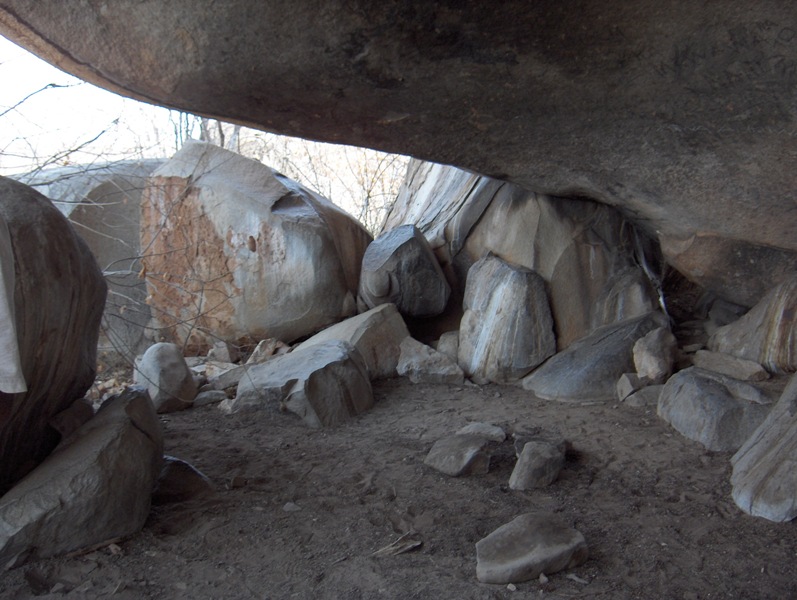
Mapango, or just Pango, are rock shelters. These posts chronicle my experiences in a granite pango in southern Tanzania, as well as other hijinks from the field.

About Me
- Ebeth
- My name is Elizabeth and I'm an archaeologist. I'm also a palaeoanthropologist, a bioarchaeologist, and a physical anthropologist, depending on the day. I'm spending the summer excavating bones (and other treasures) from an archaeological site in Tanzania. Otherwise, I'm a typical graduate student who enjoys coffee, reality television, and long walks on the beach.
No comments:
Post a Comment