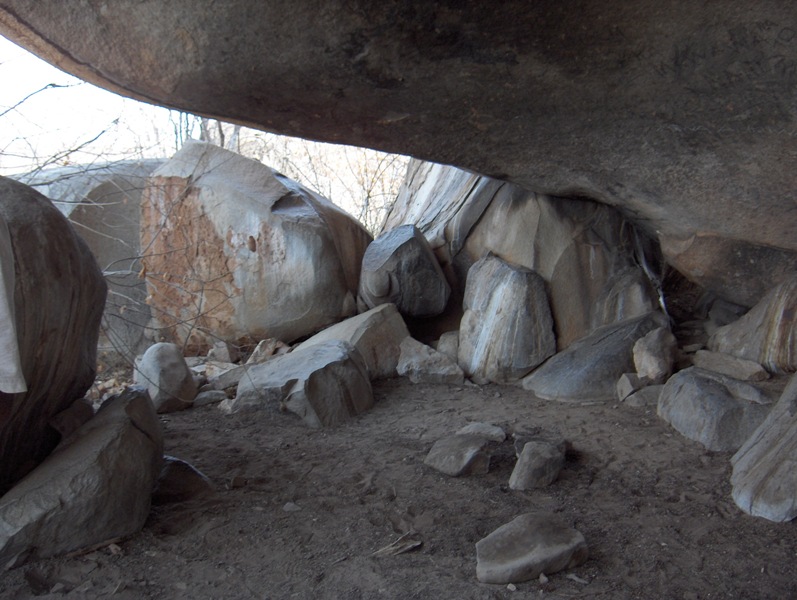
Kwanza, hongera sana Tina na Ben! Happy one year anniversary! Last year on this date, I was the maid of honour at my sister’s wedding. This year, I’m going to leave Africa. All three flights combined are projected to take 21 hours and 55 minutes, which will be broken up by 11 or so hours of layovers. I sincerely hope your anniversary is more restful than my travel plans.
As our time in Africa was winding down, I spent some time thinking about this trip and what I’ve learned from it. If I had to summarize this experience, I would say that I’m walking away with three valuable lessons.
3. I am rich.
I’ll admit that before I came to Tanzania, I had a poor attitude about my financial position in the world. After Ben and I finished our undergraduate degrees, we each worked for a year to save money for grad school. After the year was over, we faced a difficult readjustment to a student lifestyle with no paycheque. Frankly speaking, our annual income is comprised of scholarships, student loans, charity, and whatever we scrounge up after working for the summer. Close to 40% of that goes to our tuition. Because I was away conducting research this summer, that number might be greater now. As much as we love being students and are grateful for the opportunity, it is without question a sacrifice. While other twenty-somethings are getting married, buying cars and houses, having children, and saving for retirement, we’re borrowing money against future careers which are by no means certain. When I think about the 5 years of university we’ve already completed and the 2-6 we still have left to achieve our goals, I am overwhelmed. Although I’ve been lucky with funding and we have wonderful and supportive families, negotiating a two-student partnership is no easy task.
My time in Tanzania has fully absolved me of my financial stress. What I perceived as sacrifices and hardships before are a joke compared to the conditions that people regularly live in here. First and foremost, I now understand that education is a privilege and not a right. Less than ten years ago in Tanzania, there was only one university with a total of 4000 student spaces. By comparison, our university is one of several just in the province and has about 37,000 students. Given that Dar es Salaam is a city of 4.5 million and Tanzania has a population the size of Canada, only a select few Tanzanians could do what most high school students take for granted. That Ben and I can make and pay for the choice to pursue multiple university degrees already puts us on a whole other level. To this blessing I add the countless other luxuries in my life: my car, my apartment, my 20+ pairs of shoes, my large television, my coffee maker AND espresso machine, my laptop, my phone, etc. I have never been in the position where I couldn’t afford to eat, or even couldn’t afford to eat on campus when I forgot my lunch. In fact, I have never been hungry or thirsty in my life save for the times I was too forgetful or lazy to eat. I have a safe home, good healthcare, and all the other basic necessities of life. If you knew how many people don’t have any of these things, you may think differently about your lot in life as well. I am a rich woman. Knowing that eliminates a burden I didn’t even know I was carrying, and makes me want to do more with what I have.
2. There is such a thing as a calling, and I’ve found mine.
Right before her first field season in Tanzania, Katie met a colleague at an African Archaeological conference who asked her how it was working here. When Katie admitted she had yet to go, the colleague warned her that she would either make a connection with Africa or never return, and her decision would be reflected in whether she attended the next conference. This is said about archaeological field work in general, but I think it’s especially true in Africa. There is something about being part of life here that either gets under a person’s skin or makes them turn around and run home. For me, it’s so far under my skin that I’m not sure where I stop and it begins. I was actually accepted to two universities for my MA, and the project I declined would have taken me to a Middle Palaeolithic site in the Middle East. When I was making my decision between Jordan and Tanzania, one that was likely to affect my career trajectory, it was hard to ignore the feeling deep down that I should just pick Africa. I really didn’t know much about it at the time other than what I had learned through books, movies, and in a handful of classes. Now that I have been here, I can’t imagine doing research anywhere else. In fact, I have an alarmingly clear picture of what I want to do for my next degree and any subsequent work after that. Whether I’m able to manoeuvre my way into doing Stone Age bioarchaeology in East Africa is a completely different matter, but I’m sure going to try. I’ve known I want to be an anthropologist for a long time now. However, this summer has given me a whole new degree of clarity regarding what I’m good at, what will make me happy, and how I should spend my life. The feeling is comically similar to the one that struck me one day when Ben and I first starting dating; a sudden realization that “oh, looks like this is it.” Not exactly what I would call fireworks and fanfare, but rather an insight that compels you to reorganize your whole future. It doesn’t mean the path to get there will be easy, but at least you can clearly see where you’re going. And that’s a good feeling.
1. In the end, it’s all about love.
The key to happiness is probably the worst-kept secret in the entire world. It’s in every pop song, cheesy movie, and greeting card. It’s dragged out and packaged several times a year during major holiday seasons. Hugh Grant has made a career out of it. And yet no one seems to believe that all you really need is love. While I was going through my successive waves of rotten culture shock, something that always bothered me was how people who have next to nothing can always be in such good spirits. Tanzania has some of the most vivacious and animated people I have ever met. Kids without shoes ran after our car waving every single day. The Maasai women who would come help us sort would always have a smile and joke to offer. Our two workers, Thomas and Suleiman, somehow managed to camp outside the rock shelter for multiple nights and were still able to greet us warmly in the morning. And then there are the people who, despite our white skin and the money they know we spent to get here, still greet us on the street every day. How can some people, whose circumstances should make them miserable, be so cheerful? Well here it is: there’s more to life than money and things. In Tanzania, family is a higher priority that almost anything else. Children equal fortune, and large extended families often live together under the same roof. In the rural areas, entire villages literally do raise a child. Hardship unquestionably exists, but so does a fierce love of life. So even if a man doesn’t have wealth, privilege, education, or status, he very well might still be jolly as long as he’s surrounded by the people he loves. In the end, it's all that matters. I’m sorry it took me 24 years to really learn this lesson, but better late than never. I think it’s safe to say I am a better person for having been to Africa.
Sunday, August 29, 2010

Saturday, August 28, 2010
Day 72
We are officially in our last 24 hours in Tanzania. The last four days of this trip are a slow denouement to our departure tomorrow afternoon. As you have read, the transition from frenzied excavation to backfilling, artifact packing, and leaving Iringa all happened within the span of 72 hours. After we reached Dar es Salaam, it took another 72 hours to excitedly find human remains, acquire the necessary permits, and have them shipped. As of yesterday, our artifacts had already been through London and were en route to their next destination outside Toronto. By now they’re probably zooming across the prairies, well in advance of their curators. So after an exciting and fast-paced field season, we are left at the end with absolutely nothing to do. Since Thursday, we’ve been wandering around Dar es Salaam motivated entirely by fancy. We’ve been drinking an absurd amount of coffee, floating in and out of shops, and visiting all the biggest tourist hubs and shopping malls. We buy things when they catch our attention, like the saucer-sized chocolate sprinkle donuts at a bakery this morning. Basically, we are in ultimate vacation mode right now. We all have things we probably should be doing, like preparing to teach classes and labs, writing abstracts, and preparing grant proposals, but I personally would rather just coast over the finish line. This coming academic year holds the promise of back-breaking work, so why not enjoy the last of our freedom? And if having nothing to do in Dar es Salaam is the cost of freedom, so be it.
The only thing that threatens our zen-like state is the prospect of packing. We were so pleasantly sedentary this trip that I’d nearly forgotten the pain of packing. Jenn and I managed to make respectable progress yesterday afternoon, but the looming responsibility of stowing the rest is utterly off putting. Now that I am one field season wiser, I can conclusively say that I packed far too much to come here. Although I’ve culled some of my original possessions, my souvenir haul far exceeds the freed up space. Furthermore, I seem to have picked up even more stuff while whimsically touring the city over the past few days. Without the constant pressure of work, I gave in and had too much fun. I can already tell that my Tetris skills are going to be tested.
The only thing that threatens our zen-like state is the prospect of packing. We were so pleasantly sedentary this trip that I’d nearly forgotten the pain of packing. Jenn and I managed to make respectable progress yesterday afternoon, but the looming responsibility of stowing the rest is utterly off putting. Now that I am one field season wiser, I can conclusively say that I packed far too much to come here. Although I’ve culled some of my original possessions, my souvenir haul far exceeds the freed up space. Furthermore, I seem to have picked up even more stuff while whimsically touring the city over the past few days. Without the constant pressure of work, I gave in and had too much fun. I can already tell that my Tetris skills are going to be tested.
Friday, August 27, 2010
Day 71
It’s high time I talked about the Jambo Inn considering it’s where we eat dinner 5 or 6 times a week when we’re in Dar es Salaam. The Jambo Inn is the gregarious backpackers’ hostel right around the corner from the Starlight.  Although the rooms at our hotel are slightly nicer, the Jambo Inn is vastly superior in terms of food. We first started going there for the Internet Cafe, but continued long after we acquired mobile internet sticks for the eats. First of all, it has an absolutely gigantic menu. If you don’t believe me, see for yourself! You can get almost anything there including 20 or 30 different types of curry, Chinese food, a variety of different soups, beef/chicken/veggie burgers, and a half dozen types of fries. The restaurant also boasts fresh juices, including lemon, orange, pineapple, passion, mango, and watermelon. The watermelon juice in particular would give anyone one good reason to go on living. I might just reconnect with my own juicer because of it. Although we’ve made a good effort to sample all the menu items, to do so would take far longer than this field season would allow. Of the things we’ve tried, we each have our favourites. Katie likes the daal makhani and the navratan curry, Jenn likes the barbeque chicken, Pam loves the fried rice and the chicken with chips, and I’m a sucker for the hot and sour soup and cheeseburgers. However there is more than enough choice to keep us coming back for dinner almost every night of the week. Since the Inn is Muslim run, lately we’ve also had the choice of Ramadan feast dishes. I can highly recommend the chicken thaali.
 In addition to the stellar food and wide selection, the Jambo Inn has a number of endearing quirks. The restaurant is randomly closed on Wednesdays. You can get various packaged ice cream treats, foreign chocolate bars, and various types of candy from the counter beside the internet cafe. The ceiling is painted with different types of panoramic landscapes, including Niagara Falls and the Grand Canyon. The tables are all either yellow, red, green, or blue with matching chairs. There are cheesy motivation quotes on the walls painted in Disney-esque script. Sometimes when we ask for a receipt after dinner, they randomly up the bill another 18%. It’s the only place in Dar es Salaam to get ginger ale, which looks like Canada Dry except all the writing is in Arabic. Finally, the patrons of the Jambo Inn are a colourful bunch. They represent the best mix of eccentric backpackers, college students, and businessmen. For the past few nights, a group of very attractive young women in harem pants and hoop earrings have been there playing SkipBo. Seriously, SkipBo of all things. We certainly never find ourselves short of people watching opportunities. At some point during this field season, a series of places and things in Tanzania became a part of our daily life. I can’t remember when we first went to the Jambo Inn to eat, but it’s since become an integral part of our routine. We’ve been regulars there for the past two months, and will be up until we leave the day after tomorrow.
 Although the rooms at our hotel are slightly nicer, the Jambo Inn is vastly superior in terms of food. We first started going there for the Internet Cafe, but continued long after we acquired mobile internet sticks for the eats. First of all, it has an absolutely gigantic menu. If you don’t believe me, see for yourself! You can get almost anything there including 20 or 30 different types of curry, Chinese food, a variety of different soups, beef/chicken/veggie burgers, and a half dozen types of fries. The restaurant also boasts fresh juices, including lemon, orange, pineapple, passion, mango, and watermelon. The watermelon juice in particular would give anyone one good reason to go on living. I might just reconnect with my own juicer because of it. Although we’ve made a good effort to sample all the menu items, to do so would take far longer than this field season would allow. Of the things we’ve tried, we each have our favourites. Katie likes the daal makhani and the navratan curry, Jenn likes the barbeque chicken, Pam loves the fried rice and the chicken with chips, and I’m a sucker for the hot and sour soup and cheeseburgers. However there is more than enough choice to keep us coming back for dinner almost every night of the week. Since the Inn is Muslim run, lately we’ve also had the choice of Ramadan feast dishes. I can highly recommend the chicken thaali.
  In addition to the stellar food and wide selection, the Jambo Inn has a number of endearing quirks. The restaurant is randomly closed on Wednesdays. You can get various packaged ice cream treats, foreign chocolate bars, and various types of candy from the counter beside the internet cafe. The ceiling is painted with different types of panoramic landscapes, including Niagara Falls and the Grand Canyon. The tables are all either yellow, red, green, or blue with matching chairs. There are cheesy motivation quotes on the walls painted in Disney-esque script. Sometimes when we ask for a receipt after dinner, they randomly up the bill another 18%. It’s the only place in Dar es Salaam to get ginger ale, which looks like Canada Dry except all the writing is in Arabic. Finally, the patrons of the Jambo Inn are a colourful bunch. They represent the best mix of eccentric backpackers, college students, and businessmen. For the past few nights, a group of very attractive young women in harem pants and hoop earrings have been there playing SkipBo. Seriously, SkipBo of all things. We certainly never find ourselves short of people watching opportunities. At some point during this field season, a series of places and things in Tanzania became a part of our daily life. I can’t remember when we first went to the Jambo Inn to eat, but it’s since become an integral part of our routine. We’ve been regulars there for the past two months, and will be up until we leave the day after tomorrow.
Thursday, August 26, 2010
Day 70
I planned to write about how today, three days before we’re scheduled to leave Africa, we finally acquired mosquito nets to sleep under at the Starlight Hotel. It’s a long and complicated story that involves misconceptions about air conditioners, cultural incomprehensibility, and a vicious flea attack. However, my roommate Jennifer has advised me to talk about something more positive, so you’ll just have to believe me when I say the nets were long overdue and we’re very happy. In other news, here are the top 5 things I’m going to miss about Tanzania.
5. The call to prayer
Before coming to Tanzania, I had heard calls to prayer in two other countries: Turkey and Morocco. However, I was in those countries for an absurdly short amount of time and could not appreciate their beauty and regularity. In Dar es Salaam, we clearly hear the call to prayer 5 times a day like clockwork. We also heard it in Iringa, but usually only first thing in the morning since we were so far from the mosque. From a functional perspective, they are a great way to mark time without wearing a watch. However, there is also something so hauntingly beautiful about hearing prayers sung high above the city. I like to listen to them first thing in the morning and just think about the day to come. I may not be Muslim, I do feel as though they add something special to my day, and I know I’ll miss them when they’re suddenly gone.
4. The pace of life
Granted, the “no hurry in Africa” philosophy occasionally drives me insane. Everywhere we go, we seem to wait around. This was especially true this week when we were seeking permission to export. Sometimes we waited for hours for a single signature. However, the pace of life here also has its advantages. There is never anyone waiting impatiently behind you when you pay in change in a checkout line. Few people push past you on the side-walk and cars often break when they see a pedestrian trying to cross. The city still continues to function, but people are in much less of a hurry to get somewhere. As someone who is perpetually late, I find this incredibly pleasant. It’s as though the high stress, frantic aspect of your typical North American city is absent. This was even more so the case in Iringa where literally everyone moved on their own time. It’s possible that there’s a correlation between the relaxed pace of life here and the total lack of Starbucks. I’m not saying that we don’t experience pressure in Tanzania, but it feels nice not to be constantly rushing around. Like I said, no hurry in Africa.
3. The team
This item makes it onto the list because this trip really wouldn’t have been the same without them, particularly Katie and Jennifer. At first it was really difficult to get used to living with other people 24/7. However, now I’m convinced I’m going to miss it. The anecdotes, conversations, inside jokes, and pranks got us through the toughest times of the field season. Whenever I was affected by what was going on around us, or something didn’t seem right, I could look over and know that they were thinking the same thing. When obstacles arose, we had each other`s backs. And when one of us was going through something, the others were always around to listen (whether they liked it or not). One of my favourite parts of the excavation was right when Jenn and I walked through the door of our hotel room at the end of the day. We would just talk about the little things that happened at the site that day, both good and bad, and clear our minds for the rest of the night. I once had a boss named Leslie who subscribed to what she called “the summer camp theory of friendship.” When people go through an intense experience where they are living and working together (a dig, training, war, summer camp, etc), they will either become friends forever or never see each other again. I can’t think of a better way to explain what’s happened here. Life experiences are always shaped by the people around you, and so my time in Tanzania is all bound up with the people I spent it with. I’m going to miss all of that when I go home.
2. Greetings
Something that really distinguishes Tanzania from everywhere else I’ve been is the practice of constant daily greetings. It’s cultural policy here to greet almost everyone you run into, whether you enter into a genuine conversation or are just passing them on the street. There are also about a million different ways to greet someone. The go-to phrase is usually some form of “Habari (za)...” (news of...) with just about anything you want on the end. Habari yako (how are you)? Habari za kuamka (how was the getting up)? Habari za mchana (how’s the afternoon)? Habari za gari (how’s the car)? Habari za mbwa mkali (how’s the mad dog)? Habari za matatizo wa ng’ombe (how’s the cow problem)? It seems to work for everything, even if we do get a little carried away with creating our own greetings. To be honest, sometimes we are greeted so often on the street that we just pretend not to understand Kiswahili. Part of this is definitely related to being white. By this point, we’re pretty used to standing out in the crowd. People definitely tend to greet us because they recognize us as different, and that’s not always a bad thing. Today an old man who passed us on the street said, in perfect English, “Welcome to Tanzania.” I wanted to respond “we’ve been here for 70 days!” but that’s not important. Greetings are simply woven into the fabric of daily life. I imagine it will be strange to go back to Canada where you really don’t have any contact with people on the street, and where we will just be more white people in a city of 500,000 others. There is a loss of intimacy ahead that is probably going to bring sadness as well as relief.
1. Being in the thick of things
Don’t get me wrong, I love my home town. Considering I’ve lived there for my entire life, I probably even love it more than most. However, when it really comes down to it, I’m just not an Alberta archaeologist. The time I’ve spent here has really solidified my research interests in East Africa. There’s something about being here that is so ineffably exciting. It feels like there is more history for me here than anywhere else I’ve ever been. I think people who move from North America to Europe must feel the same way – that there is another level of culture and time depth all around them. I think this last point will have to remain the least explained out of the bunch because it’s just based on a feeling I get. It’s the same sensation that makes me want to return here as many times as possible over the course of my life. It’s hard to explain, but it feels like there’s something I’m supposed to do in this part of the world. So at the end of this list, the thing I will miss most about Tanzania is in fact Tanzania. There’s no better way to put it, so I think I’ll leave it at just that. I will miss Tanzania.
5. The call to prayer
Before coming to Tanzania, I had heard calls to prayer in two other countries: Turkey and Morocco. However, I was in those countries for an absurdly short amount of time and could not appreciate their beauty and regularity. In Dar es Salaam, we clearly hear the call to prayer 5 times a day like clockwork. We also heard it in Iringa, but usually only first thing in the morning since we were so far from the mosque. From a functional perspective, they are a great way to mark time without wearing a watch. However, there is also something so hauntingly beautiful about hearing prayers sung high above the city. I like to listen to them first thing in the morning and just think about the day to come. I may not be Muslim, I do feel as though they add something special to my day, and I know I’ll miss them when they’re suddenly gone.
4. The pace of life
Granted, the “no hurry in Africa” philosophy occasionally drives me insane. Everywhere we go, we seem to wait around. This was especially true this week when we were seeking permission to export. Sometimes we waited for hours for a single signature. However, the pace of life here also has its advantages. There is never anyone waiting impatiently behind you when you pay in change in a checkout line. Few people push past you on the side-walk and cars often break when they see a pedestrian trying to cross. The city still continues to function, but people are in much less of a hurry to get somewhere. As someone who is perpetually late, I find this incredibly pleasant. It’s as though the high stress, frantic aspect of your typical North American city is absent. This was even more so the case in Iringa where literally everyone moved on their own time. It’s possible that there’s a correlation between the relaxed pace of life here and the total lack of Starbucks. I’m not saying that we don’t experience pressure in Tanzania, but it feels nice not to be constantly rushing around. Like I said, no hurry in Africa.
3. The team
This item makes it onto the list because this trip really wouldn’t have been the same without them, particularly Katie and Jennifer. At first it was really difficult to get used to living with other people 24/7. However, now I’m convinced I’m going to miss it. The anecdotes, conversations, inside jokes, and pranks got us through the toughest times of the field season. Whenever I was affected by what was going on around us, or something didn’t seem right, I could look over and know that they were thinking the same thing. When obstacles arose, we had each other`s backs. And when one of us was going through something, the others were always around to listen (whether they liked it or not). One of my favourite parts of the excavation was right when Jenn and I walked through the door of our hotel room at the end of the day. We would just talk about the little things that happened at the site that day, both good and bad, and clear our minds for the rest of the night. I once had a boss named Leslie who subscribed to what she called “the summer camp theory of friendship.” When people go through an intense experience where they are living and working together (a dig, training, war, summer camp, etc), they will either become friends forever or never see each other again. I can’t think of a better way to explain what’s happened here. Life experiences are always shaped by the people around you, and so my time in Tanzania is all bound up with the people I spent it with. I’m going to miss all of that when I go home.
2. Greetings
Something that really distinguishes Tanzania from everywhere else I’ve been is the practice of constant daily greetings. It’s cultural policy here to greet almost everyone you run into, whether you enter into a genuine conversation or are just passing them on the street. There are also about a million different ways to greet someone. The go-to phrase is usually some form of “Habari (za)...” (news of...) with just about anything you want on the end. Habari yako (how are you)? Habari za kuamka (how was the getting up)? Habari za mchana (how’s the afternoon)? Habari za gari (how’s the car)? Habari za mbwa mkali (how’s the mad dog)? Habari za matatizo wa ng’ombe (how’s the cow problem)? It seems to work for everything, even if we do get a little carried away with creating our own greetings. To be honest, sometimes we are greeted so often on the street that we just pretend not to understand Kiswahili. Part of this is definitely related to being white. By this point, we’re pretty used to standing out in the crowd. People definitely tend to greet us because they recognize us as different, and that’s not always a bad thing. Today an old man who passed us on the street said, in perfect English, “Welcome to Tanzania.” I wanted to respond “we’ve been here for 70 days!” but that’s not important. Greetings are simply woven into the fabric of daily life. I imagine it will be strange to go back to Canada where you really don’t have any contact with people on the street, and where we will just be more white people in a city of 500,000 others. There is a loss of intimacy ahead that is probably going to bring sadness as well as relief.
1. Being in the thick of things
Don’t get me wrong, I love my home town. Considering I’ve lived there for my entire life, I probably even love it more than most. However, when it really comes down to it, I’m just not an Alberta archaeologist. The time I’ve spent here has really solidified my research interests in East Africa. There’s something about being here that is so ineffably exciting. It feels like there is more history for me here than anywhere else I’ve ever been. I think people who move from North America to Europe must feel the same way – that there is another level of culture and time depth all around them. I think this last point will have to remain the least explained out of the bunch because it’s just based on a feeling I get. It’s the same sensation that makes me want to return here as many times as possible over the course of my life. It’s hard to explain, but it feels like there’s something I’m supposed to do in this part of the world. So at the end of this list, the thing I will miss most about Tanzania is in fact Tanzania. There’s no better way to put it, so I think I’ll leave it at just that. I will miss Tanzania.
Wednesday, August 25, 2010
Day 69
Folks, we have a winner: day 69 was officially the longest day of this field season. We went to the museum for the third straight morning in a row to pick up our letter of permission for export. Within minutes, it was in Pam’s hot little hands and we were marching single file to the storage facility to pick up the bones in question. After I double, triple (and perhaps even quadruple) checked that I had everything I needed, the manager of the museum filled out the appropriate loan forms and we strode out the front gate, treasures in hand. Who knew it would be so easy? I’m indebted to the National Museum of Tanzania for listening to my ideas and accommodating my request. Thanks to the efforts of staff there, I will be able to bring together individuals that were collected from the same site in three separate excavations over 8 years. I might be biased, but I think that’s pretty cool.
After our morning victory, the day slowed down considerably. We waited around antiquities for over an hour for a single signature on our export permit. After that, we drove to the Nyrere Museum to pick up the boxes of artifacts we collected from the field this summer. Pastory, Anthony, and Mabulla dropped them off there last Friday on their way into Dar es Salaam. Following a quick count and some heavy lifting, it was off to the Ministry of Energy and Mines (also known as Madini) to have our rocks appraised as worthless. Even though they are archaeological samples, it’s policy to have all rock samples inspected before export to cut down on illegal mining. It should have been a relatively straightforward operation, but we ended up sitting on a concrete girder in the parking lot for several hours while Pam and Pastory tried to plead our case. Three separate officials came to look in our boxes of quartzite debitage stored in clear plastic bags. After more than a little red tape, we were finally able to have the boxes checked and sealed with packing tape, white string, and sealing wax. Around 4 pm, we reached our final destination: the shipping office. We unloaded the boxes from the car for the third and final time, helped weigh and organize them, and paid about 4 million shillings to have them sent to Canada.
All that sitting around and waiting wouldn’t have been so bad except we had guests. Pastory’s daughter and niece spent the day with us, which made sitting around in (or outside) offices a real shame. Fortunately, hanging out with preteen girls can also make the time pass faster. Katie, Jenn, and I each got our hair done and participated in some pretty hilarious photo shoots. Also, after this long, long day of waiting around, we are officially done our business in Dar es Salaam. We have our export permits and our boxes are safely at the shipping company, awaiting departure. That means we can enjoy our last four days in Africa free of responsibility. Whether I actually believe that there is no more work to be done remains to be seen. Nevertheless, we are one step closer to home.
After our morning victory, the day slowed down considerably. We waited around antiquities for over an hour for a single signature on our export permit. After that, we drove to the Nyrere Museum to pick up the boxes of artifacts we collected from the field this summer. Pastory, Anthony, and Mabulla dropped them off there last Friday on their way into Dar es Salaam. Following a quick count and some heavy lifting, it was off to the Ministry of Energy and Mines (also known as Madini) to have our rocks appraised as worthless. Even though they are archaeological samples, it’s policy to have all rock samples inspected before export to cut down on illegal mining. It should have been a relatively straightforward operation, but we ended up sitting on a concrete girder in the parking lot for several hours while Pam and Pastory tried to plead our case. Three separate officials came to look in our boxes of quartzite debitage stored in clear plastic bags. After more than a little red tape, we were finally able to have the boxes checked and sealed with packing tape, white string, and sealing wax. Around 4 pm, we reached our final destination: the shipping office. We unloaded the boxes from the car for the third and final time, helped weigh and organize them, and paid about 4 million shillings to have them sent to Canada.
All that sitting around and waiting wouldn’t have been so bad except we had guests. Pastory’s daughter and niece spent the day with us, which made sitting around in (or outside) offices a real shame. Fortunately, hanging out with preteen girls can also make the time pass faster. Katie, Jenn, and I each got our hair done and participated in some pretty hilarious photo shoots. Also, after this long, long day of waiting around, we are officially done our business in Dar es Salaam. We have our export permits and our boxes are safely at the shipping company, awaiting departure. That means we can enjoy our last four days in Africa free of responsibility. Whether I actually believe that there is no more work to be done remains to be seen. Nevertheless, we are one step closer to home.
Tuesday, August 24, 2010
Day 68
First thing this morning, we went to the National Museum to hand deliver our formal request for loan and export. I was still feeling optimistic from our meeting with the director yesterday, but I couldn’t have predicted how well it actually went. Upon seeing us, the first thing he said was “permission granted!” Then he laid out some of his stipulations, which were all extremely reasonable and easy to accommodate. Once again, a task that I thought would be nearly impossible was accomplished without so much as a hiccup. What a strange world we live in. Or perhaps what a strange world I live in. I’m so burned out at this point that I probably can’t even worry in a reasonable fashion.
Tomorrow, we should be able to pick up both our export permits from the National Museum and the Antiquities Division, round up all our boxes of artifacts, and get down to the business of shipping. As I mentioned, we need clearance from the ministry of mines since a large percentage of our artifacts are rocks. An inspector will have to look over each box to ensure we’re exporting stone tools instead of gemstones. In preparation for this, Pam has bought string, lighters, and sealing wax, so I anticipate quite the show. If all goes according to plan, we will hopefully be able to ship our artifacts back to Canada ahead of ourselves. We might even have a few days in Dar es Salaam free of responsibility at the end of the week. Now we’re really in the final act of this show.
 In some bizarre foreshadowing event, we found a genuine mall in Dar es Salaam today. It was something straight out of a North American landscape. It all started with my request to return to the infamous Chicken Hut, a great little restaurant we ate at in our first week in Africa but never again since. After enjoying some sizzling stew and ugali, we decided to explore the shopping complex behind it. We thought it was just a ShopRite (a grocery store), but in fact it was an entire mall with jewellery, souvenir, and clothing stores, a cafe and food court, and a series of large department stores. Naturally, the first thing I did was get a cup of coffee. There was a store called Game which was a passable equivalent to Wal-Mart with some food, home wears, and even an aisle of Barbies. In ShopRite, we found aisles of familiar groceries alongside some new additions like African spices, mchuzi mix, and a formidable wall of Africafe. When we were in Iringa, we ate at the hotel every night and bought our lunch groceries from a large outdoor market in which unpackaged goods were piled high in a series of colourful pyramids. Now Dar is a considerably larger city than Iringa, but we still didn’t anticipate running across a Western-style supermarket. It was so much like being at home that it gave us reverse culture shock. I can’t even imagine what actually going home will be like. At least I got some more Red Bull out of the deal.
Tomorrow, we should be able to pick up both our export permits from the National Museum and the Antiquities Division, round up all our boxes of artifacts, and get down to the business of shipping. As I mentioned, we need clearance from the ministry of mines since a large percentage of our artifacts are rocks. An inspector will have to look over each box to ensure we’re exporting stone tools instead of gemstones. In preparation for this, Pam has bought string, lighters, and sealing wax, so I anticipate quite the show. If all goes according to plan, we will hopefully be able to ship our artifacts back to Canada ahead of ourselves. We might even have a few days in Dar es Salaam free of responsibility at the end of the week. Now we’re really in the final act of this show.
 In some bizarre foreshadowing event, we found a genuine mall in Dar es Salaam today. It was something straight out of a North American landscape. It all started with my request to return to the infamous Chicken Hut, a great little restaurant we ate at in our first week in Africa but never again since. After enjoying some sizzling stew and ugali, we decided to explore the shopping complex behind it. We thought it was just a ShopRite (a grocery store), but in fact it was an entire mall with jewellery, souvenir, and clothing stores, a cafe and food court, and a series of large department stores. Naturally, the first thing I did was get a cup of coffee. There was a store called Game which was a passable equivalent to Wal-Mart with some food, home wears, and even an aisle of Barbies. In ShopRite, we found aisles of familiar groceries alongside some new additions like African spices, mchuzi mix, and a formidable wall of Africafe. When we were in Iringa, we ate at the hotel every night and bought our lunch groceries from a large outdoor market in which unpackaged goods were piled high in a series of colourful pyramids. Now Dar is a considerably larger city than Iringa, but we still didn’t anticipate running across a Western-style supermarket. It was so much like being at home that it gave us reverse culture shock. I can’t even imagine what actually going home will be like. At least I got some more Red Bull out of the deal.
Monday, August 23, 2010
Day 67
"Maisha ni safari ndefu” – life is a long journey. It’s the proverb on one of my khangas, but it also seems to describe my day. I didn’t sleep much last night, and as a result I felt thoroughly apathetic about going to the museum this morning. Today was our fourth attempt to see the artifacts from our rock shelter excavated in 2002. The last three times, I went in with high hopes. This time, I went in ready to accept whatever our fate may be. This was partially due to the wealth of bones we found in the field this summer which has made me feel less desperate about what might be at the museum. It was also because we’re at the end of our summer and I’m pretty tired. Anyway, I was the picture of serenity when we pulled up at the museum this morning.

You can imagine how surprised I was when I found that the staff were expecting us and had retrieved the collections for our viewing. I was even more surprised when there were unequivocal human remains present in the sample. Not a bag of teeth as was previously suggested (there were teeth, but they were faunal), but nonetheless a healthy portion of an adult skeleton. What’s more, it appears that this is a completely separate individual from the one we excavated this summer. The mystery of our rock shelter continues to grow. The discovery of remains at the museum kicked off a full day of hard work that I wasn’t exactly prepared for. I had come equipped with my forms and field reference manual, but I really didn’t anticipate there being quite so much material. After about an hour, Pam and Pastory left to seek our export permit at the antiquities division, leaving Katie, Jenn, and I to our labour. We spent the next 4.5 hours inventorying the bone collection without taking a single break. I identified and photographed the bones while Katie organized the bags and wrote labels and Jenn recorded. We were also fortunate enough to run into the Director of the museum, who we believed to be in Iringa, and speak with him about his excavation. I think there is great potential to collaborate with the museum on the analysis of these remains. I’m really interested to see how this relationship progresses over the next week. Although I started the day with pretty low expectations, there are right back up to normal, sky-high levels. Right when I thought this field season was winding down, one more final challenge pops up. If life is a long journey, this field season is sure doing a great job of imitating several lifetimes.

You can imagine how surprised I was when I found that the staff were expecting us and had retrieved the collections for our viewing. I was even more surprised when there were unequivocal human remains present in the sample. Not a bag of teeth as was previously suggested (there were teeth, but they were faunal), but nonetheless a healthy portion of an adult skeleton. What’s more, it appears that this is a completely separate individual from the one we excavated this summer. The mystery of our rock shelter continues to grow. The discovery of remains at the museum kicked off a full day of hard work that I wasn’t exactly prepared for. I had come equipped with my forms and field reference manual, but I really didn’t anticipate there being quite so much material. After about an hour, Pam and Pastory left to seek our export permit at the antiquities division, leaving Katie, Jenn, and I to our labour. We spent the next 4.5 hours inventorying the bone collection without taking a single break. I identified and photographed the bones while Katie organized the bags and wrote labels and Jenn recorded. We were also fortunate enough to run into the Director of the museum, who we believed to be in Iringa, and speak with him about his excavation. I think there is great potential to collaborate with the museum on the analysis of these remains. I’m really interested to see how this relationship progresses over the next week. Although I started the day with pretty low expectations, there are right back up to normal, sky-high levels. Right when I thought this field season was winding down, one more final challenge pops up. If life is a long journey, this field season is sure doing a great job of imitating several lifetimes.
Sunday, August 22, 2010
Day 66
Seeing as we’ve done quite a bit of it in Dar es Salaam, I thought I would write a little about shopping here. Everywhere I’ve been in the world has its own specific categories of crafts and souvenirs, and here they include beaded jewellery, wooden carvings, khangas, scarves, metal jewellery, hematite and malachite jewellery, coffee and teas, spices, and baskets. Remember that we tend to have a lot of down time in this city while we wait for offices to be open and permits to be processed. Also keep in mind that the Tanzanian members of IRAP live in Dar es Salaam, so our troop is reduced to the four Canadian women. Now that I’ve suitably defended our habit, there are two main places where tourists, wazungu and otherwise, tend to shop.
The Slipway
Location: Msasani Peninsula
 The Slipway is an outdoor shopping market couched between several high end hotels and the Indian Ocean. It’s location on the edge of the city and the enclosed market set up tends to give it a resort-like feeling. People who stay in the adjacent hotels can essentially avoid entering Dar es Salaam proper before they no doubt depart for their expensive safaris. We like the Slipway because it’s a relaxing, sunny place where it’s almost impossible get into trouble. Nearly everyone speaks English and is used to tourists. Also, because it’s mostly self-contained, you can easily spend an afternoon shopping, relaxing, and enjoying a nice lunch. There are 4 or 5 restaurants at the Slipway, including a sushi place we have yet to try, as well as an ice cream store. All of the eating areas are outdoors and right on the ocean and the tables are usually shaded by some form of thatched hut. One of the restaurants in particular serves a selection of gourmet salads, which are rare in this country and therefore get us really excited. A series of ritzy stores surround the restaurants, including a Tanzanite dealer, a Western-style book store, and some elite furniture places. Slightly further on, there is a small shopping centre with craft stores and our favourite Tanzanian clothing store, Mapozi, which makes dresses and other clothes out of Khanga and Katenge. Finally, there is a covered market crowded with small stalls that peddle local carvings, jewellery, textiles, art, paintings, and other souvenirs. The prices at the market are relatively good, but the vendors can be aggressive and it’s not always clear whether or not they are the artisans. Also, the market is usually only open on weekends. However, when it is open, there is an amazing selection of Tinga Tinga paintings made directly on the premises. Sometimes we feel guilty about going to the Slipway because it is probably the least African-friendly place in Dar es Salaam. It feels a bit odd to be sequestered away in a resort area where most of the local people we see are working. However, sometimes we just need a safe, relaxing place to go when we need to get out of our hotel. We usually end up going there when we want to kill some time, and maybe do some shopping in the meantime.
Mwenge
Location: Mwenge District
 Mwenge is the wood carvers' market in Dar es Salaam, and has a completely different atmosphere than the Slipway. It’s located closer to the centre of town and is nothing like resort. It’s an expansive open-air market with a large centre area lined by a series of stalls and shops. There are no restaurants (or public washrooms for that matter) because it’s a place specifically devoted to shopping. Most vendors at the Slipway speak a fair bit of English, but at Mwenge almost all of the transactions have to be conducted in a mixture of Swahili and English (or Swinglish, as we’ve begun to call our code-switching). Also unlike the Slipway, the prices are far more negotiable and bartering is an essential skill. We tend to see tourists, but never just lounging or hanging out. Mwenge attracts a more determined breed of craft and souvenir shoppers who are willing to do serious business. The vendors are occasionally frighteningly aggressive, and if you’re not strong willed, you will get pulled into every single shop. Shopping at Mwenge is infinitely more exhausting, and can only be undertaken for an hour or two before we have to stop and get some food. However, we usually leave with quite a haul. All the shops are captained by local artists and the quality of the carvings and other pieces is very high. There is also a much greater selection of everything at Mwenge, including our favourite Tinga Tinga paintings, and they are usually quite well priced. Consequently, going here requires a lot of energy and a full shopping commitment. We usually go there on weekends when we’re looking for specific gifts for people back home, or when we’re feeling up to a shopping challenge. If the Slipway is like going to the mall to browse, Mwenge is West Edmonton Mall on Boxing Day.
Bright and early tomorrow morning, we’re going to visit the National Museum in the hopes of finally resolving the mystery of the lost artifacts. If you have been following since the beginning, you know that I have been trying to get access to these items since we first landed in mid-June. Thus far, they have been inaccessible in museum storage as the result of ongoing renovations. The day we left for Iringa for the last time, we received a call that they were finally available for our viewing. At this point, I really couldn’t say if the collection will have any bearing on our research. At minimum, it constitutes an array of artifacts collected from the same rock shelter 8 years ago that should be included in our analysis. At the most, there might be additional individuals represented there that might shed some light on whether the site was used for mortuary practices. I’m glad we got our last shopping out of the way this weekend because I have no idea what the next few days will bring.
The Slipway
Location: Msasani Peninsula
 The Slipway is an outdoor shopping market couched between several high end hotels and the Indian Ocean. It’s location on the edge of the city and the enclosed market set up tends to give it a resort-like feeling. People who stay in the adjacent hotels can essentially avoid entering Dar es Salaam proper before they no doubt depart for their expensive safaris. We like the Slipway because it’s a relaxing, sunny place where it’s almost impossible get into trouble. Nearly everyone speaks English and is used to tourists. Also, because it’s mostly self-contained, you can easily spend an afternoon shopping, relaxing, and enjoying a nice lunch. There are 4 or 5 restaurants at the Slipway, including a sushi place we have yet to try, as well as an ice cream store. All of the eating areas are outdoors and right on the ocean and the tables are usually shaded by some form of thatched hut. One of the restaurants in particular serves a selection of gourmet salads, which are rare in this country and therefore get us really excited. A series of ritzy stores surround the restaurants, including a Tanzanite dealer, a Western-style book store, and some elite furniture places. Slightly further on, there is a small shopping centre with craft stores and our favourite Tanzanian clothing store, Mapozi, which makes dresses and other clothes out of Khanga and Katenge. Finally, there is a covered market crowded with small stalls that peddle local carvings, jewellery, textiles, art, paintings, and other souvenirs. The prices at the market are relatively good, but the vendors can be aggressive and it’s not always clear whether or not they are the artisans. Also, the market is usually only open on weekends. However, when it is open, there is an amazing selection of Tinga Tinga paintings made directly on the premises. Sometimes we feel guilty about going to the Slipway because it is probably the least African-friendly place in Dar es Salaam. It feels a bit odd to be sequestered away in a resort area where most of the local people we see are working. However, sometimes we just need a safe, relaxing place to go when we need to get out of our hotel. We usually end up going there when we want to kill some time, and maybe do some shopping in the meantime.
Mwenge
Location: Mwenge District
 Mwenge is the wood carvers' market in Dar es Salaam, and has a completely different atmosphere than the Slipway. It’s located closer to the centre of town and is nothing like resort. It’s an expansive open-air market with a large centre area lined by a series of stalls and shops. There are no restaurants (or public washrooms for that matter) because it’s a place specifically devoted to shopping. Most vendors at the Slipway speak a fair bit of English, but at Mwenge almost all of the transactions have to be conducted in a mixture of Swahili and English (or Swinglish, as we’ve begun to call our code-switching). Also unlike the Slipway, the prices are far more negotiable and bartering is an essential skill. We tend to see tourists, but never just lounging or hanging out. Mwenge attracts a more determined breed of craft and souvenir shoppers who are willing to do serious business. The vendors are occasionally frighteningly aggressive, and if you’re not strong willed, you will get pulled into every single shop. Shopping at Mwenge is infinitely more exhausting, and can only be undertaken for an hour or two before we have to stop and get some food. However, we usually leave with quite a haul. All the shops are captained by local artists and the quality of the carvings and other pieces is very high. There is also a much greater selection of everything at Mwenge, including our favourite Tinga Tinga paintings, and they are usually quite well priced. Consequently, going here requires a lot of energy and a full shopping commitment. We usually go there on weekends when we’re looking for specific gifts for people back home, or when we’re feeling up to a shopping challenge. If the Slipway is like going to the mall to browse, Mwenge is West Edmonton Mall on Boxing Day.
Bright and early tomorrow morning, we’re going to visit the National Museum in the hopes of finally resolving the mystery of the lost artifacts. If you have been following since the beginning, you know that I have been trying to get access to these items since we first landed in mid-June. Thus far, they have been inaccessible in museum storage as the result of ongoing renovations. The day we left for Iringa for the last time, we received a call that they were finally available for our viewing. At this point, I really couldn’t say if the collection will have any bearing on our research. At minimum, it constitutes an array of artifacts collected from the same rock shelter 8 years ago that should be included in our analysis. At the most, there might be additional individuals represented there that might shed some light on whether the site was used for mortuary practices. I’m glad we got our last shopping out of the way this weekend because I have no idea what the next few days will bring.
Saturday, August 21, 2010
Day 65
Our work-related objectives in Dar es Salaam are as follows:
- Obtain an export permit from the Antiquities Division for the materials we collected
- Get the rocks cleared by the ministry of mines as (commercially) worthless
- Finally see the artifacts housed at the National Museum
- If the collection pertains to our research, petition the National Museum for another export permit
- Find a way to ship back all our treasures to Canada
 Fortunately for us, none of these tasks are possible on the weekend! In order to look like we were making an effort, we reconfirmed our flight home with United Emirates and dropped by the shipping company we plan to use (good news, they accept credit cards!) Afterwards, there was nothing left to do except work on some of our non-work related objectives. We got some coffee, bought some more time for our mobile internet devices, and then got down to the serious business of shopping. After spending so much time in the sticks, perusing the stalls at the Slipway was a bit of a readjustment. I’d forgotten how aggressive the vendors in Dar es Salaam can be compared to the ladies at the Maasai women’s collective. However, in the grand scheme of things, dealing with pushy artisans is a lot more comfortable than the straight month of 10 hour work days we just finished. We rounded the day off by each eating an entire pizza, bonding with the Internet in our hotel rooms, eating ice cream, and watching Two and Half Men on the only English-language channel we get. I know things won’t stay this quiet once the weekend is over, but for now it really does feel like we’re on vacation.
- Obtain an export permit from the Antiquities Division for the materials we collected
- Get the rocks cleared by the ministry of mines as (commercially) worthless
- Finally see the artifacts housed at the National Museum
- If the collection pertains to our research, petition the National Museum for another export permit
- Find a way to ship back all our treasures to Canada
 Fortunately for us, none of these tasks are possible on the weekend! In order to look like we were making an effort, we reconfirmed our flight home with United Emirates and dropped by the shipping company we plan to use (good news, they accept credit cards!) Afterwards, there was nothing left to do except work on some of our non-work related objectives. We got some coffee, bought some more time for our mobile internet devices, and then got down to the serious business of shopping. After spending so much time in the sticks, perusing the stalls at the Slipway was a bit of a readjustment. I’d forgotten how aggressive the vendors in Dar es Salaam can be compared to the ladies at the Maasai women’s collective. However, in the grand scheme of things, dealing with pushy artisans is a lot more comfortable than the straight month of 10 hour work days we just finished. We rounded the day off by each eating an entire pizza, bonding with the Internet in our hotel rooms, eating ice cream, and watching Two and Half Men on the only English-language channel we get. I know things won’t stay this quiet once the weekend is over, but for now it really does feel like we’re on vacation.
Friday, August 20, 2010
Day 64
Today started with a generous serving of bacon, which I believe is hands down the best way to start any day. This is true everywhere, but particularly in Tanzania where we’ve eaten hardly any pork, much less bacon, in weeks. Our hearty English breakfast was also the perfect follow up to my restful night in a king sized bed. We capped off our luxurious morning with a trip to the Genesis Inn snake park, where we wandered around the tanks and learned which Tanzanian snakes possess venom that can kill you within 30 minutes. Take my word for it and stay away from those black mambas. We also saw some turtles and crocodiles, and a pen full of scared, shrieking guinea pigs awaiting slaughter. I really identified with one of the crocodiles because he and I are both 24. He was my crocodile twin, so to speak.
After we hit the road, our day became notably less exciting. We drove through Mikumi national park for the 5th and final time, and saw some more zebras, giraffes, impalas, buffalo, and elephants. I have to say, I feel pretty lucky to have seen elephants every single time we passed through the park on this trip. I came to Tanzania with two goals: to see elephants and to find human remains. By some miracle I was able to accomplish both. Reflecting on our amazing animal luck made the rest of the five hour drive to Dar es Salaam a lot more tolerable, although no less hot and cramped. As with the last time, Killindo and Philliminus stopped every so often to pick up produce and other goods from vendors along the road. By the end of the trip, I was wedged in between tomatoes and baskets, trying to avoid the pieces of charcoal that fell from the roof and into the back window. It didn’t help that we were unable to find anywhere to stop for lunch because of Ramadan, and had to wait to eat until 4:30 pm. However, we made it here safe and sound, which is all that matters.
Today is Katie and Chris’ 5th wedding anniversary, so we decided to celebrate after we checked into our hotel and cooled off with cold showers. After getting curry at the Jambo Inn and coffee at the Movenpick, we set off to the rooftop restaurant and bar at the Kilimanjaro. Although the hotel is too expensive for the likes of us, we’d been there once before for my birthday and enjoyed watching the sun set on the Dar es Salaam harbour. Today we were able to eat outside and really appreciate our surroundings. Also, they had mini guacamole burgers on the menu which could single-handedly make a person believe in a greater good. Although we wished our team mate could be at home with her husband, we tried our best to be suitable replacements. Katie and Chris have now spent 4 out of a total 5 of their wedding anniversaries apart because Katie is pursuing this crazy dream of ours in Tanzania. We’re all sorry that she’s not at home celebrating, but I understand her rationale for being here. Fortunately, her husband does as well. Also fortunately, our return to Dar es Salaam means that the end is very near. We’ll be home in 10 days, after we’ve secured our export permits and picked up our final souvenirs. It’s closer than you think!
After we hit the road, our day became notably less exciting. We drove through Mikumi national park for the 5th and final time, and saw some more zebras, giraffes, impalas, buffalo, and elephants. I have to say, I feel pretty lucky to have seen elephants every single time we passed through the park on this trip. I came to Tanzania with two goals: to see elephants and to find human remains. By some miracle I was able to accomplish both. Reflecting on our amazing animal luck made the rest of the five hour drive to Dar es Salaam a lot more tolerable, although no less hot and cramped. As with the last time, Killindo and Philliminus stopped every so often to pick up produce and other goods from vendors along the road. By the end of the trip, I was wedged in between tomatoes and baskets, trying to avoid the pieces of charcoal that fell from the roof and into the back window. It didn’t help that we were unable to find anywhere to stop for lunch because of Ramadan, and had to wait to eat until 4:30 pm. However, we made it here safe and sound, which is all that matters.
Today is Katie and Chris’ 5th wedding anniversary, so we decided to celebrate after we checked into our hotel and cooled off with cold showers. After getting curry at the Jambo Inn and coffee at the Movenpick, we set off to the rooftop restaurant and bar at the Kilimanjaro. Although the hotel is too expensive for the likes of us, we’d been there once before for my birthday and enjoyed watching the sun set on the Dar es Salaam harbour. Today we were able to eat outside and really appreciate our surroundings. Also, they had mini guacamole burgers on the menu which could single-handedly make a person believe in a greater good. Although we wished our team mate could be at home with her husband, we tried our best to be suitable replacements. Katie and Chris have now spent 4 out of a total 5 of their wedding anniversaries apart because Katie is pursuing this crazy dream of ours in Tanzania. We’re all sorry that she’s not at home celebrating, but I understand her rationale for being here. Fortunately, her husband does as well. Also fortunately, our return to Dar es Salaam means that the end is very near. We’ll be home in 10 days, after we’ve secured our export permits and picked up our final souvenirs. It’s closer than you think!
Thursday, August 19, 2010
Day 63
Simply put, today was a fantastic day. After the Isimila hotel treated us to a farewell free breakfast (after all, we have been living there for over a month), we hit the road bright and early. At about 10:30, we stopped at a gas station outside of Mbuyuni to pick up some snacks and inadvertently discovered a brand of chips that tastes exactly like Kraft Dinner. I think they must use the same chemical cheese. KD Mac n’ Cheese is a very special food group for Canadians, students, and especially Canadian students. The first time I visited my sister in England, I brought a couple boxes in my suitcase and was mystified when her boyfriend and flat mate didn’t immediately take to it. After 63 days without KD, finding a comparable replacement really made my day.
 We arrived in the town of Mikumi just before noon, where we checked into our hotel and grabbed a quick bite to eat. Then we drove into the park and spent the next five and half glorious hours driving around and watching animals to our hearts’ content. I think going on safari was the perfect way to conclude our time in interior Tanzania. We’ve been so preoccupied with our research lately that was nice to stop and look around, and remember how beautiful this place really is. Seeing a compendium of baby animals didn’t hurt either. Today we saw giraffes, wildebeest, buffalo, impala, warthogs, zebras, all sorts of birds, hippos, and my perpetual favourite, elephants. Not only were the animals much closer this time, but they certainly knew how to pose for pictures. We also had several hilarious run-ins with warthogs, an accidental tomato injury, and a guide who wasn’t afraid to climb onto to the roof of our car and hang on to the roof rack looking for animals while we drove around. After a full afternoon of sightseeing, we left the park right at sunset. I think the image of the sun setting over the savannah was worth coming all the way to Africa, even without everything else that has happened over the past 9 weeks.
Two things stand out about my experiences inside the national park. First of all, I was surprised that the animals interact with one another so much. I suppose zoos and television gave me the notion that different animals tend to keep to themselves. However, that’s really not how the ecosystem works. Instead, elephants cavort with giraffes, birds sit on water buffalo, and zebras share shade with impala. I found it really interesting to watch all these large mammals interact with one another in their environment. It adds a whole other dimension to seeing and appreciating wild animals. Secondly, it was hard to get used to noticing flies again. For the last few months, we’ve put up with flies in and around our food, in our rooms, and constantly buzzing around our heads. When we don’t eat outside, the windows and doors of restaurants are always open which makes it impossible to control the insects. Throw in the conditions of a tropical climate and you get ubiquitous flies. Most of the time, I don’t even remember to brush them off. However, the situation radically changes in the national parks due to the presence of Tse Tse flies that spread sleeping sickness. All of a sudden, our guide Anderson was brushing flies off people and warning us to be careful. And trust me, once you start to notice the flies again, they’re absolutely everywhere. Furthermore, what I thought was a completely safe purple sweater turned out to be the exact colour to which they are attracted. Consequently, I spent most of the day in just a tank top, paranoid about the flies. Just another Tanzanian adventure.

We are staying in Mikumi tonight at a place called the Genesis Inn. Pam likes this hotel because the beds are huge, the restaurant serves pork, and you get free admission to the snake park next door with your booking. This is the first “tourist hotel” we’ve stayed at and objectively, it’s very nice. However, it’s almost too nice. Suddenly we have queen sized beds, a shower curtain, and a ceiling fan. Tonight at dinner, our food came within half an hour and all the orders were correct. Also, we were served carrot soup and rolls before dinner and crepes with jam afterwards. The staff speaks English to us, even when we know the correct Swahili words. Worst of all, this place is crawling with other wazungus. We’ve been spending so much time with each other and our Tanzanian colleagues that apparently we’ve become somewhat territorial around other white people. It doesn’t help that we are staying next door to a rowdy group of Americans who refuse to speak Kiswahili and come off as just a little culturally insensitive. We have had such a different experience here compared to most safari travellers that it’s legitimately hard to relate. Whose country is this anyway? Still, the combination of going on safari and staying at this magnificent hotel has made for quite the mini-vacation. Best of all, we’ve been told to expect a proper English breakfast before we set out for Dar es Salaam tomorrow morning. I don’t know if I could get used to this, but I sure appreciate it right now.
 We arrived in the town of Mikumi just before noon, where we checked into our hotel and grabbed a quick bite to eat. Then we drove into the park and spent the next five and half glorious hours driving around and watching animals to our hearts’ content. I think going on safari was the perfect way to conclude our time in interior Tanzania. We’ve been so preoccupied with our research lately that was nice to stop and look around, and remember how beautiful this place really is. Seeing a compendium of baby animals didn’t hurt either. Today we saw giraffes, wildebeest, buffalo, impala, warthogs, zebras, all sorts of birds, hippos, and my perpetual favourite, elephants. Not only were the animals much closer this time, but they certainly knew how to pose for pictures. We also had several hilarious run-ins with warthogs, an accidental tomato injury, and a guide who wasn’t afraid to climb onto to the roof of our car and hang on to the roof rack looking for animals while we drove around. After a full afternoon of sightseeing, we left the park right at sunset. I think the image of the sun setting over the savannah was worth coming all the way to Africa, even without everything else that has happened over the past 9 weeks.
Two things stand out about my experiences inside the national park. First of all, I was surprised that the animals interact with one another so much. I suppose zoos and television gave me the notion that different animals tend to keep to themselves. However, that’s really not how the ecosystem works. Instead, elephants cavort with giraffes, birds sit on water buffalo, and zebras share shade with impala. I found it really interesting to watch all these large mammals interact with one another in their environment. It adds a whole other dimension to seeing and appreciating wild animals. Secondly, it was hard to get used to noticing flies again. For the last few months, we’ve put up with flies in and around our food, in our rooms, and constantly buzzing around our heads. When we don’t eat outside, the windows and doors of restaurants are always open which makes it impossible to control the insects. Throw in the conditions of a tropical climate and you get ubiquitous flies. Most of the time, I don’t even remember to brush them off. However, the situation radically changes in the national parks due to the presence of Tse Tse flies that spread sleeping sickness. All of a sudden, our guide Anderson was brushing flies off people and warning us to be careful. And trust me, once you start to notice the flies again, they’re absolutely everywhere. Furthermore, what I thought was a completely safe purple sweater turned out to be the exact colour to which they are attracted. Consequently, I spent most of the day in just a tank top, paranoid about the flies. Just another Tanzanian adventure.

We are staying in Mikumi tonight at a place called the Genesis Inn. Pam likes this hotel because the beds are huge, the restaurant serves pork, and you get free admission to the snake park next door with your booking. This is the first “tourist hotel” we’ve stayed at and objectively, it’s very nice. However, it’s almost too nice. Suddenly we have queen sized beds, a shower curtain, and a ceiling fan. Tonight at dinner, our food came within half an hour and all the orders were correct. Also, we were served carrot soup and rolls before dinner and crepes with jam afterwards. The staff speaks English to us, even when we know the correct Swahili words. Worst of all, this place is crawling with other wazungus. We’ve been spending so much time with each other and our Tanzanian colleagues that apparently we’ve become somewhat territorial around other white people. It doesn’t help that we are staying next door to a rowdy group of Americans who refuse to speak Kiswahili and come off as just a little culturally insensitive. We have had such a different experience here compared to most safari travellers that it’s legitimately hard to relate. Whose country is this anyway? Still, the combination of going on safari and staying at this magnificent hotel has made for quite the mini-vacation. Best of all, we’ve been told to expect a proper English breakfast before we set out for Dar es Salaam tomorrow morning. I don’t know if I could get used to this, but I sure appreciate it right now.
Wednesday, August 18, 2010
Day 62
Tonight is out last night in Iringa and I have to admit, I’m not exactly ready to go. This afternoon, we packed up our artifacts and suitcases to send ahead to Dar es Salaam with Pastory and our second car. I only have to throw my few remaining effects into my backpack, which I’m sure I’ll do in a mad panic at the last minute tomorrow morning. Pam, Katie, Jenn, Killindo, Philliminus, and I also intend to leave tomorrow, but we plan to take 2 days to reach Dar es Salaam and spend a night in the national park. That way we can arrive during office hours on Friday, when we can hopefully kick start our application for export. Naturally, the director of the National Museum plans to leave for Iringa tomorrow just as we leave to see him in the capital. We’ll probably even pass one another on the highway, like star-crossed lovers destined never to embrace. I’m starting to believe that our quest to see the artifacts stored at the museum is cursed. Then again, this field season wouldn’t be half as interesting without one final obstacle to conquer. In the meantime, I’m really excited about finally going on safari in Mikumi. Although we’re driven through the park 3 times now, we’ve only seen the animals apathetic enough to loiter by the road. Tomorrow we’ll have the chance to actually drive into the park and see all the animals that have hitherto eluded us. I hope there’s a hippo or two in my future.
 We managed to spend a very relaxing final day in our study area. This morning we reported our findings to the municipal, district, and regional authorities. Continuing the trend of the past few days, our work didn’t seem to take very long at all. By 10:30, we were free and ready to shop for last minute souvenirs. We spent a few hours walking around the market and shops, and even managed to squeeze in another pot of magical coffee. Last week when we were still in the midst of excavating, I felt more than ready to pack up and ship home. Now that the moment has come, I’m not so sure. I’m sure all of you already predicted as much, but I’m really going to miss this town.
 We managed to spend a very relaxing final day in our study area. This morning we reported our findings to the municipal, district, and regional authorities. Continuing the trend of the past few days, our work didn’t seem to take very long at all. By 10:30, we were free and ready to shop for last minute souvenirs. We spent a few hours walking around the market and shops, and even managed to squeeze in another pot of magical coffee. Last week when we were still in the midst of excavating, I felt more than ready to pack up and ship home. Now that the moment has come, I’m not so sure. I’m sure all of you already predicted as much, but I’m really going to miss this town.
Tuesday, August 17, 2010
Day 61
Still riding high from the success of yesterday, we spent today washing and sorting the rest of our artifact boxes. In honour of the home stretch, Iringa did its best to seem extra hot and desolate. If I never see quartz micro-debitage again, it might just be too soon. That being said, I’m ecstatic the work is done! At final count, we have 31 boxes of artifacts that we hope to send back to Canada for analysis over the next year. We’re leaving for Dar at the end of the week with the aim of accomplishing just that. Cross your fingers that our end of trip permits are processed faster than the ones at the beginning.
I still can’t quite believe that we’re done the archaeological component of our field work. I just spent the last 96 hours trying to record and collect an unexpected burial feature, and now it's suddenly all over. I even started packing today since we plan to leave early Thursday morning. This field season has been jammed packed with abrupt high and lows. Although we only have one day left, I’m suddenly not prepared to leave Iringa. What if I never come back? Tomorrow I plan to burn this town into my memory, just in case.
I still can’t quite believe that we’re done the archaeological component of our field work. I just spent the last 96 hours trying to record and collect an unexpected burial feature, and now it's suddenly all over. I even started packing today since we plan to leave early Thursday morning. This field season has been jammed packed with abrupt high and lows. Although we only have one day left, I’m suddenly not prepared to leave Iringa. What if I never come back? Tomorrow I plan to burn this town into my memory, just in case.
Monday, August 16, 2010
Day 60

INATOSHA! Leo ni siku ya mwisho! Today was our last day with our beautiful pango. As I mentioned yesterday, we had a truly daunting list of things to accomplish at the site today. By some miracle, we managed to finish them all by 2 pm. The first thing we did this morning was take an official IRAP photo in the entrance of our rock shelter. It was pretty crucial to snap it first thing given how dirty we planned on getting today. The second the auto-timer went off, we rushed to set up the total station. At my behest, we excavated one last level this morning underneath where we found the human remains. I pronounced the feature finished 3 days ago, but then doubt started to creep into my mind. What if there was something else below? What if I missed something? What if failure to execute one more level would ruin my thesis, my career, and my life?! As a testament to their excellent character, the rest of the team humoured me and sat down to screen and collect one more level of goodies. Of course, there was nothing there.
 However, we finished at a depth which allows me to conclusively say we have all the remains, and therefore I can sleep soundly at night.
  As soon as my paranoia was assuaged, we set about to an even more undesirable task: backfilling. If you recall, the traumatic loss of our tarp spread much of the dirt we removed down the hill. After marking the bottom of our trench and throwing in many of the rocks we originally removed, we set up an old fashioned bucket brigade to transport the remaining dirt. I’m not really sure how we did it (this is where the miracle must have happened), but we managed to refill the trench in less than an hour with dirt to spare. Then we sat around for a bit eating oranges and marvelling at our good fortune. Sometimes the most intimidating tasks end up being the simplest. Or maybe the universe finally took pity on us on our last day of field work.
On our way back to Iringa, we stopped at the Maasai and Wahehe villages along the road to tell them we’re finished, say goodbye, and pass out the last of the candy and pens. We also re-visited Nyamahana, the largest village in the area, to similarly report on our summer. It’s strange to think we won’t be going down that road anymore. After a month and a half in Iringa, everybody knows us and waves as we drive by in the morning. We have a relationship with this place and its people. I didn’t think I would be sad to leave our pango, but I have to admit that I am. It’s an odd little world that I’ll never forget. But as we discovered, we’re not the first and we won’t be the last people to make it home. The wind has changed and it’s time to move on to a new family. As for us, it’s time to start packing up for the long journey home. Only 2 weeks to go.

Sunday, August 15, 2010
Day 59
Of the 14 meals we typically eat at the Isimila hotel per week (breakfast and dinner), I have goulash soup and chapattis for an average of 8-10 of them. It’s hard to explain the irresistible lure of the goulash soup. First of all, it doesn’t resemble goulash whatsoever. I know this because in 2008, my sister and I went on what became an informal goulash tour of Austria, Hungary, and the Czech Republic. What started as an innocent holiday between sisters became a goulash education. That’s how I know that what I eat for breakfast and dinner most days is really just beef vegetable soup. However, that doesn’t make it any less tasty. It reminds me of something my Mom or Baba would make, and it’s filling without being heavy. I tend to want to eat it in the mornings and evening when Iringa is at its coldest. So far, it’s one of the only reliable menu items that doesn’t aggravate my Malarone-sensitive stomach. Finally, I’m pretty sure I’m incapable of getting sick of it. This morning, there was quite literally a fly in my goulash soup. I didn’t think that actually happened! I tried to pick it out and soldier on (after all, we are in Africa) but I was too put off. I swore to myself that I would cool it on the goulash soup for awhile. However, 8 hours later at dinner, I was right back on the soup train. I don’t know what kind of spell it has put on me, but I have a feeling I’m actually going to miss it when I’m back in Canada. That is, after I gorge on every fast food known to man. In the middle of the night it will call to me and I’ll shed a tear for my lost soup.
You may have noticed that I just wrote a blog post about soup. Well boys and girls, that’s because we’ve reached the most high-stress period of this entire field season. I’ll try my best to continue posting, but time is pretty limited these days. Tomorrow is our last day at the site, where we will have roughly 6 hours to excavate one more level, backfill our 2x3 metre trench, and then visit the closest village, Nyamahana, to report of our summer findings. I’m not sure how we intend to bend the laws of space and time to accommodate all that, but I’m interested to see how it goes. Afterwards, we are allowing ourselves one day to wash and catalogue all of the remaining artifacts boxes (which currently stands at 2.5) and pack them for transport back to Dar es Salaam. Wednesday will be dedicated to office visits, packing, and last minute shopping in the hopes that we can leave Iringa on Thursday morning. Needless to say, the next few days are going to get pretty hairy. Not only do we have to close up our excavated pango, but we have to pack up our entire life here in Iringa. After living here for over a month, it seems like a big job. Time to channel the power of the goulash.
You may have noticed that I just wrote a blog post about soup. Well boys and girls, that’s because we’ve reached the most high-stress period of this entire field season. I’ll try my best to continue posting, but time is pretty limited these days. Tomorrow is our last day at the site, where we will have roughly 6 hours to excavate one more level, backfill our 2x3 metre trench, and then visit the closest village, Nyamahana, to report of our summer findings. I’m not sure how we intend to bend the laws of space and time to accommodate all that, but I’m interested to see how it goes. Afterwards, we are allowing ourselves one day to wash and catalogue all of the remaining artifacts boxes (which currently stands at 2.5) and pack them for transport back to Dar es Salaam. Wednesday will be dedicated to office visits, packing, and last minute shopping in the hopes that we can leave Iringa on Thursday morning. Needless to say, the next few days are going to get pretty hairy. Not only do we have to close up our excavated pango, but we have to pack up our entire life here in Iringa. After living here for over a month, it seems like a big job. Time to channel the power of the goulash.
Saturday, August 14, 2010
Day 58
In addition to dogs, Tanzania is full of children! Apparently 1 in 4 teenage girls are mothers, and about 50% of the country’s population is under 18. Women tend to get married and have children at a younger age, and large family sizes are highly desirable. Throw in religious convictions and a lack of contraceptive health care and you get children galore. Kids are actually a pretty big part of our days here in Iringa. We always see mothers going about their daily business, including highly physical tasks like hauling produce, with their babies slung on their backs in khangas. It seems like babies here rarely cry or fuss because they are constantly with their mothers, just hanging out and observing the world. One day, a Maasai woman and her 3 kids came to visit us at the site and helped us sort artifacts. Her baby had just reached the crawling stage so there was a bell on his leg so she would know when he got away. In Canada we might have more cribs and fewer poisonous snakes, but I think tying a bell on a baby is one of the greatest ideas ever. Every time I see an un-belled baby I’m tempted to inquire if he needs a good home and I can keep him forever. As for the older children, they comprise the vast majority of the peanut gallery that watches us while we excavate. Even when we don’t have candy or pens to give them, we’re still more fun to whisper about than the cows and goats under their charge. The kids around here also wave at our car everywhere we go. Many also yell either “WAZUNGU” (white people) or “NIPE PIPI” (give me candy). The other day, 2 farm boys threw rocks at our car and one actually managed to hit the open passenger side window, almost taking out Pam. Our driver Philliminus, who has 4 children of his own, stopped the land rover, threw it in reverse, and yelled something fierce at those kids. That’s probably the fastest I have ever seen two little boys run in my life. It reminded me of something my dad and his brother probably would have done when they were 7 year old boys in Saskatchewan.
Without contest, our favourite Tanzanian child is Jack, the little boy who lives in one of the villages close to our site. I can’t remember when we started calling him Jack, but the name suits his personality. He’s about 3 or 4, but then again the kids here seem smaller (probably because there are no hormones in their meat, when they get meat at all) so he might be older. The first day we drove to the site, he was wearing a yellow shirt, no pants, and threw a stick at our car. Ever since then, we take bets every day on how Jack will be on our way to the site. His behaviour fluctuates between happy and waving, indifferent, and angry and potentially hostile, with some combination of yellow pants, yellow shirt, and red sweater. One morning last week, he surprised us all by beating his chest and making the universal “you want a piece of this?” gesture. Now that we’ve been going to and from the rock shelter for over a month, he seems to be getting used to us. When he’s in a good mood he smiles and coyly waves. When he’s in a bad mood, he’s expanded into to using other weapons like rocks and his fists. Jack is a very complex and constantly evolving human being. Although I haven’t run the numbers, I think there is probably some correlation between Jack’s morning demeanour and how successful we are at the site each day. There is probably also an interesting case study on culture contact in there, since it’s unclear whether he had ever seen white people before us. We probably won’t get to meet Jack and find out his real name before we leave this country, but I like to think that he will have a good life for all the joy he’s brought us during our morning commute. Thanks for making this trip great, buddy.
Without contest, our favourite Tanzanian child is Jack, the little boy who lives in one of the villages close to our site. I can’t remember when we started calling him Jack, but the name suits his personality. He’s about 3 or 4, but then again the kids here seem smaller (probably because there are no hormones in their meat, when they get meat at all) so he might be older. The first day we drove to the site, he was wearing a yellow shirt, no pants, and threw a stick at our car. Ever since then, we take bets every day on how Jack will be on our way to the site. His behaviour fluctuates between happy and waving, indifferent, and angry and potentially hostile, with some combination of yellow pants, yellow shirt, and red sweater. One morning last week, he surprised us all by beating his chest and making the universal “you want a piece of this?” gesture. Now that we’ve been going to and from the rock shelter for over a month, he seems to be getting used to us. When he’s in a good mood he smiles and coyly waves. When he’s in a bad mood, he’s expanded into to using other weapons like rocks and his fists. Jack is a very complex and constantly evolving human being. Although I haven’t run the numbers, I think there is probably some correlation between Jack’s morning demeanour and how successful we are at the site each day. There is probably also an interesting case study on culture contact in there, since it’s unclear whether he had ever seen white people before us. We probably won’t get to meet Jack and find out his real name before we leave this country, but I like to think that he will have a good life for all the joy he’s brought us during our morning commute. Thanks for making this trip great, buddy.
Friday, August 13, 2010
Day 57
Yesterday was the start of Ramadan, which two of our colleagues are observing. Although the days here aren’t quite as long as they are back in Edmonton, I’m still impressed by their dedication. Archaeological field work is already a taxing endeavour, but doing so without eating while the sun is up is pretty amazing. It’s also been interesting to spend this time in a largely-Islamic country. Life really does go on as per usual, despite the fasting. It makes me wonder how many comforts we really need in the field.
Today was likely our second last day of excavation before we start our final tasks of drawing a stratigraphic profile, backfilling, and reporting to local offices. This morning I excavated the 10 cm under where we found the skeleton to look for additional fragments and associated artifacts. Just to be careful, I only used plastic tools and paintbrushes so it went painfully slow. I can’t say I was disappointed when we didn’t find much bone underneath the feature and could resume excavation like normal. I was also pretty thrilled to finally step out of that trench. There is't a lot of room left towards the bottom, so I’ve spent the last 3 days in the field contorting my body around large rocks as not to stand in the grid. Although it was very rewarding to excavate human remains, it occasionally required feats of acrobatics. I’m not exactly known for my grace so it was a bit of challenge at times. Our final objective at the rock shelter is to find the bedrock and establish the bottom of the archaeological sequence. Due to time constraints and rock interference, we will only be able to excavate one of the units to the bottom, and even that will be a race against time. However, this final goal is pretty significant. I think by this point, we’re all wondering what lies underneath the Later Stone Age. Given the field season that we’ve had so far, I wouldn’t be surprised if it’s something none of us predicted. In fact, at this point I’ll only be surprised if it turns out to be Narnia. We have been in the field too long to expect normal outcomes. Wish us luck on the big reveal!
Today was likely our second last day of excavation before we start our final tasks of drawing a stratigraphic profile, backfilling, and reporting to local offices. This morning I excavated the 10 cm under where we found the skeleton to look for additional fragments and associated artifacts. Just to be careful, I only used plastic tools and paintbrushes so it went painfully slow. I can’t say I was disappointed when we didn’t find much bone underneath the feature and could resume excavation like normal. I was also pretty thrilled to finally step out of that trench. There is't a lot of room left towards the bottom, so I’ve spent the last 3 days in the field contorting my body around large rocks as not to stand in the grid. Although it was very rewarding to excavate human remains, it occasionally required feats of acrobatics. I’m not exactly known for my grace so it was a bit of challenge at times. Our final objective at the rock shelter is to find the bedrock and establish the bottom of the archaeological sequence. Due to time constraints and rock interference, we will only be able to excavate one of the units to the bottom, and even that will be a race against time. However, this final goal is pretty significant. I think by this point, we’re all wondering what lies underneath the Later Stone Age. Given the field season that we’ve had so far, I wouldn’t be surprised if it’s something none of us predicted. In fact, at this point I’ll only be surprised if it turns out to be Narnia. We have been in the field too long to expect normal outcomes. Wish us luck on the big reveal!
Thursday, August 12, 2010
Day 56
Sweet freedom! Our colleague Edwin, a PhD student from UCL, has joined the ranks of Iringa researchers visiting IRAP. This afternoon he and the boys went out to visit Iron Age smelting sites, so we decided to snub our remaining unwashed artifacts and take the rest of the day off. After lunch at the New Ruaha Hotel, Katie, Jenn, and I slowly walked back in order to get in some final shopping time before we leave Iringa next week. Not only did we manage to spend most of our remaining cash, but we found a coffee house that actually serves Tanzanian coffee! Throughout this field season, I have suffered the pain of our close proximity to coffee-bearing fields without being able to enjoy any real coffee. The vast majority goes directly to export. It’s easier to get Tanzanian coffee on campus than in Tanzania. Instead, Tanzanians drink Africafe which mocks me every morning at the breakfast table. It still has the necessary caffeine, but it doesn’t taste like coffee. Although it’s grown on me over the past 7 weeks, I still crave the real deal like nothing else. Lately, my dreams have been taking place in a Tim Horton’s. Anyway, after finally stumbling across filter coffee today, I went a little overboard and drank most of two large tea pots full in the space of half an hour. Jenn helped a little, but she mostly tried to stand clear of my flailing. It’s been a really long time since I had real coffee, so now I’m feeling a little invincible. Maybe I’ll spend the rest of the night updating my photo log. Or lifting heavy rocks, we’ll have to see.
One of the recurring themes of this field season seems to be the start-stop nature of our work. For the first two weeks, we idled around in Dar es Salaam waiting for paperwork. After arriving in Iringa, we worked for ten straight days only to return to Dar for another mini-vacation. This final stretch in Iringa has been the hardest I’ve ever worked in my life. If anyone asks me how my “vacation” went when I get home, I think I might lose my mind. But in a week’s time, we’ll be back on the coast shipping our artifacts and winding down to go home. We are trapped in a bizarre archaeological feast-famine cycle that has us amped up at all times. Maybe it’s a blessing I haven’t had coffee during this time. However, that doesn’t mean that I’m not going to hit a Tim Horton’s the minute I step off a plane in Canada.
One of the recurring themes of this field season seems to be the start-stop nature of our work. For the first two weeks, we idled around in Dar es Salaam waiting for paperwork. After arriving in Iringa, we worked for ten straight days only to return to Dar for another mini-vacation. This final stretch in Iringa has been the hardest I’ve ever worked in my life. If anyone asks me how my “vacation” went when I get home, I think I might lose my mind. But in a week’s time, we’ll be back on the coast shipping our artifacts and winding down to go home. We are trapped in a bizarre archaeological feast-famine cycle that has us amped up at all times. Maybe it’s a blessing I haven’t had coffee during this time. However, that doesn’t mean that I’m not going to hit a Tim Horton’s the minute I step off a plane in Canada.
Wednesday, August 11, 2010
Day 55
It has been a hectic couple of days, to say the least. Towards the end of the day on Monday, Pastory called me over to look at what appeared to be human bone fragments lying against a large slab of rock in his unit. Although they weren’t immediately identifiable, they had the exact same coloration and concretions as the remains I worked on in 2006 from this site. We had to excavate some of the surrounding quadrants in order to investigate at that depth, so we devoted the entire team to that task the very next morning. By about 11 am yesterday, we were ready to start taking excavating the area around the suspected remains. Within the hour, we had a crushed human skull. By the afternoon, we had a shoulder and an upper arm which we found beneath a large triangular rock. We photographed, mapped and measured the remains in situ, but ultimately had to take them out before we left the site at the end the day. Given the problems we’ve been having with visitors while we’re away, we couldn’t risk leaving the remains exposed. Furthermore, because we had such a large group of Maasai spectators while we were removing the bones, we asked Thomas and Suleiman to camp out for another night at the site. By then, it was clear that we had uncovered a burial and there was more to be found. This morning, after we were greeted by our rather cold and sleepy workers, we set about exposing the rest of the body. By lunch time today, I had exposed parts of the jaw, teeth, neck, vertebral column, ribs, and the other arm and shoulder. We were also able to identify the boundary of the 2006 test pit, which essential cut the body in half. When I analyzed the remains 2 years ago, I noted that we were missing much of the upper body and the skull. However, I didn’t imagine that we would literally find the other half of the same individual 4 years after the original excavation. Not only have we managed to reunite a body that has been separated on different continents, but I can now justify all the funding I’ve received for this project. I came to Tanzania in pursuit of additional human remains from this rock shelter, and that is what I have. It’s nice when life works out so neatly.
We managed to recover most of the burial feature over 2 days, although we will still have to excavate and screen the sediment from underneath the skeleton. Working on this feature has really taken a lot out of entire team. Finding a burial on our 4th last day of excavation was a welcome surprise, but it hasn’t come cheap. I think I could sleep for a week if given the chance. Although I’m happy with the way this field season has gone, I don’t think it will really sink in until I’m back home and processing everything in the lab. And we still have 2 weeks and a lot of sleep deprivation to go before that point.
We managed to recover most of the burial feature over 2 days, although we will still have to excavate and screen the sediment from underneath the skeleton. Working on this feature has really taken a lot out of entire team. Finding a burial on our 4th last day of excavation was a welcome surprise, but it hasn’t come cheap. I think I could sleep for a week if given the chance. Although I’m happy with the way this field season has gone, I don’t think it will really sink in until I’m back home and processing everything in the lab. And we still have 2 weeks and a lot of sleep deprivation to go before that point.
Monday, August 9, 2010
Day 53
Today was an exceptionally long day that ended with the promise of another long day tomorrow. There have been some interesting developments at the site and I’m eager to see where they lead. It’s a little too early to get excited, but I’m hopeful. That being said, today was a pretty rough day. Therefore, I’m going to talk about dogs.
 Tanzania was made for dog lovers. The whole country is overrun by what are essentially farm dogs, and marvellous ones at that. They are more prevalent in the rural areas where they assist with herding goats and cows, but we see dogs absolutely everywhere. Strangely enough, most of them even look alike. They are all about Labrador-sized with tan coats and floppy ears. Whenever we see a dog with different colours and features, it’s a momentous occasion with a lot of pointing. It doesn’t seem like any of the dogs are pets. Although many are loosely associated with people, they aren’t trained at all and they’re fairly resistant to petting. Also, most of them have colonies of interesting other creatures living in their fur. Whenever pint-sized Maasai herdsmen show up at our site looking for candy, they are almost always accompanied by a canine friend or two. I always tell them “ninapenda mbwa” (I love dogs) and they look at me like I’m a little cracked. After all, one does not love dogs, they are simply there. They also laughed at me the day I tried to coax one into letting me pet him and he barked at me. The dogs here remind me of Riley, the wondrous dog that presided over my archaeological field school in southern Alberta. He didn’t really belong to anyone, but rather roamed about freely protecting his dominion. He was like the spirit of that site. Likewise, the dogs here have their own mysterious agendas that people don’t quite fit into. They seem completely unfettered by the rules of human society, and I love them for it. This is one place where all the dogs seem happy, half wild, and free.
To date, I have seen five skinny and irate-looking cats in Tanzania. Sorry, cat lovers.
 Tanzania was made for dog lovers. The whole country is overrun by what are essentially farm dogs, and marvellous ones at that. They are more prevalent in the rural areas where they assist with herding goats and cows, but we see dogs absolutely everywhere. Strangely enough, most of them even look alike. They are all about Labrador-sized with tan coats and floppy ears. Whenever we see a dog with different colours and features, it’s a momentous occasion with a lot of pointing. It doesn’t seem like any of the dogs are pets. Although many are loosely associated with people, they aren’t trained at all and they’re fairly resistant to petting. Also, most of them have colonies of interesting other creatures living in their fur. Whenever pint-sized Maasai herdsmen show up at our site looking for candy, they are almost always accompanied by a canine friend or two. I always tell them “ninapenda mbwa” (I love dogs) and they look at me like I’m a little cracked. After all, one does not love dogs, they are simply there. They also laughed at me the day I tried to coax one into letting me pet him and he barked at me. The dogs here remind me of Riley, the wondrous dog that presided over my archaeological field school in southern Alberta. He didn’t really belong to anyone, but rather roamed about freely protecting his dominion. He was like the spirit of that site. Likewise, the dogs here have their own mysterious agendas that people don’t quite fit into. They seem completely unfettered by the rules of human society, and I love them for it. This is one place where all the dogs seem happy, half wild, and free.
To date, I have seen five skinny and irate-looking cats in Tanzania. Sorry, cat lovers.
Sunday, August 8, 2010
Day 52
Happy peasant’s day! Today’s Tanzanian national holiday is one I can really relate to given my long family history of Slavic serfdom. We celebrated by carrying heavy things up a hill and moving dirt around in a purposeful manner. When you think about it, the core of archaeological field work is essentially ditch digging. Just think of us as the new-age peasants of the southern Tanzanian highlands.
 We only have 2 weeks left in Iringa and 3 weeks left in the country, and I still have a laundry list of Tanzanian oddities that I want to describe. Today’s item is dala dalas and the practice of naming one’s vehicle. Dala dalas are the Tanzanian mode of municipal public transit. They look like vans with about 12 seats, although there are always far more than a dozen people in one at any given time. I’m not sure how much they cost to ride because we have our rented cars and also Pam has explicitly forbidden us to ride in a vehicle where any part of our bodies might hang out. However, they seem to run everywhere and they are always full, so it must be fairly cheap. Considering very few people own cars here, the extensive public transit system is what keeps the cities running. The best part of dala dalas is that they all have something painted on the front and rear windows. It’s usually a phrase, but it can also be a random word or a brand name. The front is almost always different from the back, and the two don’t necessarily have to agree. Sometimes there is just a confused looking elephant or a smug lion on the rear glass. The other day, we stalled out on the hill that leads up into town because the dala dala in front of us was going too slowly. I have to say, it was pretty amusing to be victimized by “Jesus Power.” Best of all, the dala dalas aren’t the only vehicles in Tanzania that have identities. I’ve also seen cabs, long-distance buses, and even semi-trucks painted up. The practice doesn’t seem to extend to private vehicles, but those are the exception on the roads anyway. Of the public and business vehicles, my favourites so far are:
5. The Upendo (love) buses that go between cities. Naturally, the O is a heart symbol.
4. The English football league cabs – so far I’ve seen Arsenal, Manchester United, and Chelsea
3. The Queen Latifah cab
2. The Bob Marley and the Wailers dala dala
1. The R. Kelly semi-truck
As far as I can tell, there is no particular reason why the vehicles around here are named. Although some bear company names or trademarks, it’s doesn’t seem like it’s for the purpose of advertising. Instead, I get the feeling that cars are given identities when they are first acquired, kind of like a totem. I like to think there are people who specialize in divining the essence of motor vehicles. “This one is an ‘Early Stone Age!’ This one is a ‘Bravo family!’ This one is just a picture of Africa!” Maybe a car has to have a name in order to reach its true potential. Whatever the case is, I look forward to passing other cars on the road just to read what they say. I think it will be strange to return to Canada where all the cars are so impersonal by comparison. I'm always going to wonder what they would say if they were given the chance.
 We only have 2 weeks left in Iringa and 3 weeks left in the country, and I still have a laundry list of Tanzanian oddities that I want to describe. Today’s item is dala dalas and the practice of naming one’s vehicle. Dala dalas are the Tanzanian mode of municipal public transit. They look like vans with about 12 seats, although there are always far more than a dozen people in one at any given time. I’m not sure how much they cost to ride because we have our rented cars and also Pam has explicitly forbidden us to ride in a vehicle where any part of our bodies might hang out. However, they seem to run everywhere and they are always full, so it must be fairly cheap. Considering very few people own cars here, the extensive public transit system is what keeps the cities running. The best part of dala dalas is that they all have something painted on the front and rear windows. It’s usually a phrase, but it can also be a random word or a brand name. The front is almost always different from the back, and the two don’t necessarily have to agree. Sometimes there is just a confused looking elephant or a smug lion on the rear glass. The other day, we stalled out on the hill that leads up into town because the dala dala in front of us was going too slowly. I have to say, it was pretty amusing to be victimized by “Jesus Power.” Best of all, the dala dalas aren’t the only vehicles in Tanzania that have identities. I’ve also seen cabs, long-distance buses, and even semi-trucks painted up. The practice doesn’t seem to extend to private vehicles, but those are the exception on the roads anyway. Of the public and business vehicles, my favourites so far are:
5. The Upendo (love) buses that go between cities. Naturally, the O is a heart symbol.
4. The English football league cabs – so far I’ve seen Arsenal, Manchester United, and Chelsea
3. The Queen Latifah cab
2. The Bob Marley and the Wailers dala dala
1. The R. Kelly semi-truck
As far as I can tell, there is no particular reason why the vehicles around here are named. Although some bear company names or trademarks, it’s doesn’t seem like it’s for the purpose of advertising. Instead, I get the feeling that cars are given identities when they are first acquired, kind of like a totem. I like to think there are people who specialize in divining the essence of motor vehicles. “This one is an ‘Early Stone Age!’ This one is a ‘Bravo family!’ This one is just a picture of Africa!” Maybe a car has to have a name in order to reach its true potential. Whatever the case is, I look forward to passing other cars on the road just to read what they say. I think it will be strange to return to Canada where all the cars are so impersonal by comparison. I'm always going to wonder what they would say if they were given the chance.
Saturday, August 7, 2010
Day 51
Last night at about 1:30 am, our esteemed colleague Katie was the victim of a spontaneous bathroom explosion. When she attempted to flush the toilet, the hose unhooked and starting spraying wildly which quickly drenched the entire bathroom. She had to turn off the water using the emergency valve which was conveniently located right next to the toilet (kind of seems like this has happened before, doesn’t it?) Per our notion of African karma, we were positive that this meant we would have an amazing day at the site. Also, the fruit salad at breakfast tasted and smelled like onions and they forgot Jenn’s coffee. We were good as gold.
Gold is not what we found. Instead, we were greeted by an anxious looking Suleiman who reported that during our 3 day absence, some brazen Maasai attempted to steal the tarp holding our back dirt. They actually went through all the trouble of shovelling our rather large pile of dirt down the side of the mountain only to be thwarted at the last minute. Our other worker, Thomas, interrupted them mid-operation and they ran off, leaving the tarp behind. However, the damage was already done. I can’t tell you how disheartening it was to see our dirt all down the side of slope. Not only does this mean that backfilling is going to take four times as long, but it will be hard not to disturb the surface artifacts eroding out of the slope. A lot of thought went into where we placed our back dirt pile so it would minimally impact the archaeological site. That’s also why we bought a tarp in the first place. In anticipation of its worth, we told the Maasai that we would give them all of our excavation tools and supplies as soon as we were finished. It’s unclear whether they thought the excavation was over, if they just grew impatient, or if this was a different group entirely. For equally ambiguous reasons, they also pulled out a lot of our nails and stacked them in a neat pile at the back of the rock shelter.
I know that as far as possible site disturbances go, we were lucky that we only lost our back dirt. The most important thing is that our open excavation trench was untouched. However, I can’t say this tarp debacle didn’t get to me. The worst part is, whoever tried to take our tarp wasn’t doing so out of malice. They almost certainly needed it to keep their home cool and dry, or likewise shelter their animals. A tarp of that size has untold value in the middle of the bush. They tried to take it because they didn’t have any other way to acquire something like that. As with many other annoying quirks in Tanzania, the underlying problem is that we are living in a broken world. How do I blame global economic inequality for stealing our tarp? Or should I direct my anger towards myself and everyone I’ve ever met for being part of the problem? The best solution is not to get angry in the first place, which is something I’m working on. After 51 days, the thousands of little injustices start to wear a person down. How do you go about fixing the cracks at the bottom when the entire system is falling apart? It’s never just about a tarp. In fact, nothing here is as simple as it seems.
Gold is not what we found. Instead, we were greeted by an anxious looking Suleiman who reported that during our 3 day absence, some brazen Maasai attempted to steal the tarp holding our back dirt. They actually went through all the trouble of shovelling our rather large pile of dirt down the side of the mountain only to be thwarted at the last minute. Our other worker, Thomas, interrupted them mid-operation and they ran off, leaving the tarp behind. However, the damage was already done. I can’t tell you how disheartening it was to see our dirt all down the side of slope. Not only does this mean that backfilling is going to take four times as long, but it will be hard not to disturb the surface artifacts eroding out of the slope. A lot of thought went into where we placed our back dirt pile so it would minimally impact the archaeological site. That’s also why we bought a tarp in the first place. In anticipation of its worth, we told the Maasai that we would give them all of our excavation tools and supplies as soon as we were finished. It’s unclear whether they thought the excavation was over, if they just grew impatient, or if this was a different group entirely. For equally ambiguous reasons, they also pulled out a lot of our nails and stacked them in a neat pile at the back of the rock shelter.
I know that as far as possible site disturbances go, we were lucky that we only lost our back dirt. The most important thing is that our open excavation trench was untouched. However, I can’t say this tarp debacle didn’t get to me. The worst part is, whoever tried to take our tarp wasn’t doing so out of malice. They almost certainly needed it to keep their home cool and dry, or likewise shelter their animals. A tarp of that size has untold value in the middle of the bush. They tried to take it because they didn’t have any other way to acquire something like that. As with many other annoying quirks in Tanzania, the underlying problem is that we are living in a broken world. How do I blame global economic inequality for stealing our tarp? Or should I direct my anger towards myself and everyone I’ve ever met for being part of the problem? The best solution is not to get angry in the first place, which is something I’m working on. After 51 days, the thousands of little injustices start to wear a person down. How do you go about fixing the cracks at the bottom when the entire system is falling apart? It’s never just about a tarp. In fact, nothing here is as simple as it seems.
Friday, August 6, 2010
Day 50
This morning on the way to breakfast, I dropped one of the earrings Ben bought me as a going away present. Although I spent 10 minutes crawling on the cement looking for it along with a very kind hotel employee, it was nowhere to be found. I thought it was gone forever when all of a sudden, Jennifer found it by the stairwell just before we loaded the car to go to the site. I think she must have interfered with some cosmic sacrifice because the day went downhill from there. On the way to the rock shelter, the brakes failed on one of the cars and we had to make an emergency stop at an Orthodox church to fix it. Although it seemed to be repaired with some tinkering, the next hill proved otherwise and we inevitably had to turn back to town for safety reasons. We still had 2 final boxes of artifacts to wash, so we set about doing that even though we had a late start. Washing artifacts after anticipating going to the field is like waking up expecting Christmas and getting a shot instead. By the time we were finished the first box, it was well after noon and we were starving. Unfortunately, the new restaurant we tried out lost my order and didn’t bring me any food. Finally, in the midst of another long stint of laying out artifacts, I noticed that the hotel laundry put a hole in my favourite shirt. All because of an earring. It is possible we are also being punished because Frank arrived last night, which means that at our most critical hour, IRAP is 10 members strong.
 After 3 straight days of mundane artifact washing, our new favourite topics of conversation are the foods back home that we miss and what we plan to eat first upon our return. The consensus between Jennifer, Katie, and I is that sushi is the frontrunner. However, we’re also missing: real coffee, macaroni and cheese, Chinese food (specifically Ho Ho’s in Hub Mall), Boston Pizza, Wendy’s, cheese, pizza, cheese pizza, bacon, edamame, spaghetti with parmesan, garlic bread, turkey, stuffing, and cereal. Although the trip isn’t over yet, we have a solemn pact to eat McDonald’s at 3:30 am in the Dubai Airport. We also talk a lot about the Starbucks in Terminal 5 at Heathrow. Don’t get me wrong, the food in Tanzania is amazing. However, it’s unlike anything we typically eat at home. The very fact that we eat almost every meal with our hands makes it a different kind of experience. We freak out pretty much any time we find a food item that we can get in Canada. The connection between home and food is so strong that it seems to supersede all the other reasons we’re eager to get back. Or maybe food represents why we want to come home. I miss coffee because I’m in withdrawal, but I also miss all of you who drink coffee with me. All I know right now is that I would do almost anything for a chicken mcnugget.
 After 3 straight days of mundane artifact washing, our new favourite topics of conversation are the foods back home that we miss and what we plan to eat first upon our return. The consensus between Jennifer, Katie, and I is that sushi is the frontrunner. However, we’re also missing: real coffee, macaroni and cheese, Chinese food (specifically Ho Ho’s in Hub Mall), Boston Pizza, Wendy’s, cheese, pizza, cheese pizza, bacon, edamame, spaghetti with parmesan, garlic bread, turkey, stuffing, and cereal. Although the trip isn’t over yet, we have a solemn pact to eat McDonald’s at 3:30 am in the Dubai Airport. We also talk a lot about the Starbucks in Terminal 5 at Heathrow. Don’t get me wrong, the food in Tanzania is amazing. However, it’s unlike anything we typically eat at home. The very fact that we eat almost every meal with our hands makes it a different kind of experience. We freak out pretty much any time we find a food item that we can get in Canada. The connection between home and food is so strong that it seems to supersede all the other reasons we’re eager to get back. Or maybe food represents why we want to come home. I miss coffee because I’m in withdrawal, but I also miss all of you who drink coffee with me. All I know right now is that I would do almost anything for a chicken mcnugget.
Thursday, August 5, 2010
Day 49
Today I spent 7 hours washing artifacts and 2 hours updating my photo log. On the days we wash and sort artifacts, I photograph the remains I’ve identified as part of my field inventory. This has resulted in a stupidly large number of photos to keep track of. I had 231 site and lab photos to input since I last updated my spreadsheet on July 27th, and that’s only from one camera. I figure it’s better to be trigger happy now than curse myself for forgetting something when I’m writing up in a few months. Furthermore, the bones I’m working with are exceptionally fragile and fragmentary and there is no guarantee that they will reach Canada in the same condition we shipped them. We plan to spend a little extra to give them a VIP trip back home, but it`s necessary to take some extra precautions. You would think that artifacts would be a bit more durable after surviving in the ground for thousands of years, but that’s just the way the cookie (or rib fragment) crumbles.
 As a team, we are making decent progress in terms of artifact processing. Out of 22 boxes collected, 20 are washed, counted, and packed for export. We typically collect 2 boxes of artifacts for each day we’re in the field, and are able to wash 3 per day in the lab. To save time and cut down on waste, we pack artifacts in the same Maji Africa boxes that we buy bottled water in. After spending the next 2 days at the site, we should be able to catch up on all our boxes during our next bout of washing. We may be a little burned out, but we are still efficient as ever! It seems as though processing the first Stone Age levels has done wonders for our morale. If nothing else, washing lithics is much more pleasant than washing iron slag. I think it`s safe to say that these past 2 days of work have been a great success. Given that the next few levels we will excavate are probably going to be the most significant (at least in terms of my research question), I just hope we can keep up the momentum. Good thing we can get Red Bull in Iringa.
 As a team, we are making decent progress in terms of artifact processing. Out of 22 boxes collected, 20 are washed, counted, and packed for export. We typically collect 2 boxes of artifacts for each day we’re in the field, and are able to wash 3 per day in the lab. To save time and cut down on waste, we pack artifacts in the same Maji Africa boxes that we buy bottled water in. After spending the next 2 days at the site, we should be able to catch up on all our boxes during our next bout of washing. We may be a little burned out, but we are still efficient as ever! It seems as though processing the first Stone Age levels has done wonders for our morale. If nothing else, washing lithics is much more pleasant than washing iron slag. I think it`s safe to say that these past 2 days of work have been a great success. Given that the next few levels we will excavate are probably going to be the most significant (at least in terms of my research question), I just hope we can keep up the momentum. Good thing we can get Red Bull in Iringa.
Wednesday, August 4, 2010
Day 48
It’s day 48 of 74 and we are definitely focused on the end game. We have 15 days left in Iringa, half of which we will spent excavating and half washing artifacts. We also have to fit in office reports and backfilling somewhere in there, but I’ll leave that for my supervisor to worry about. The stress out here is palpable! Given our present situation, we really threw ourselves into artifact washing and sorting today. Our new antiquities officer, Anthony, finally arrived the day before yesterday and we immediately put him to work scrubbing and counting. Anyone we can bribe, cajole, or trick into helping us is fair game at this point. Sometimes we’ll even try to con the hotel staff into carrying basins of water upstairs for us. However it’s been getting harder and harder, so I think they might be on to us. It must have hit 35 degrees with no wind while we were washing artifacts after lunch. While sitting on the hot cement counting shell fragments into bunches of 50, I felt like I was in a battle of wills with the elements. It was a race to finish counting each level before falling over from heatstroke. How can one place possibly be so hot during the day and so cold at night? It seems as though Africa has no intention of easing up on us during this final stretch. What a little minx.
It sounds like we might really strike it rich later this week because our newest member of IRAP, Frank, might be joining us from Dar es Salaam. Frank is starting his PhD with Pam this September, but since he lives in Tanzania and we’re helpless foreigners, he’s been lending a hand throughout the summer. He’s the one who has been working with the National Museum to retrieve those artifacts from 2002, and he organized our meeting with the Provost in mid-July. Now he might even sacrifice spending time with his family to give us a hand in the field. If it’s not already obvious, there is a pretty active Frank Fan Club here at the Isimila hotel. The thought of acquiring another fully trained archaeologist so late in the game makes my mouth water. Furthermore, he’s a zooarchaeologist (i.e., he specializes in archaeological animal bones) which means he can shoulder some of the burden of identifying bone fragments. I guess we’ll just have to be extra good for the next few days and hope for a miracle. In the meantime, we can look forward to another day of artifact washing tomorrow.
It sounds like we might really strike it rich later this week because our newest member of IRAP, Frank, might be joining us from Dar es Salaam. Frank is starting his PhD with Pam this September, but since he lives in Tanzania and we’re helpless foreigners, he’s been lending a hand throughout the summer. He’s the one who has been working with the National Museum to retrieve those artifacts from 2002, and he organized our meeting with the Provost in mid-July. Now he might even sacrifice spending time with his family to give us a hand in the field. If it’s not already obvious, there is a pretty active Frank Fan Club here at the Isimila hotel. The thought of acquiring another fully trained archaeologist so late in the game makes my mouth water. Furthermore, he’s a zooarchaeologist (i.e., he specializes in archaeological animal bones) which means he can shoulder some of the burden of identifying bone fragments. I guess we’ll just have to be extra good for the next few days and hope for a miracle. In the meantime, we can look forward to another day of artifact washing tomorrow.
Tuesday, August 3, 2010
Day 47

I’m concerned about an imminent goat invasion. Iringa is a goat-heavy region in general, and there is a particularly robust population in the immediate vicinity of our site. They are a major part of the Maasai lifestyle, along with cattle, so we often see them around. They are usually accompanied by Maasai kids and a dog or two, charged with keeping the goats in line. Although we’ve been hearing them from the first day in our rock shelter, lately they’ve been getting closer and closer. I think it’s because their tiny herdsmen have also been getting closer in the pursuit of candy. It started with finding goat presents on the path up the hill to our site. Next, the highly audible bleating started. Finally today, I spied them in room 2 of the rock shelter, which is connected to room 1 by a narrow opening. A few goats even looked like they meant to come straight through. And what would we do then? Fight to the death for our pango?
While discussing goats at lunch, Katie, Jenn, and I got on the topic of reality vs. presentation when it comes to archaeological research. In reality, there is always a healthy mix of unavoidable disaster and human error operating behind the scenes. Walls collapse, quads are mixed up, photos are lost, and curious visitors make off with artifacts. However, none of those points ever make it into archaeological publications. From the perspective of the academy, archaeological sites are tidy little experiments in which hypotheses are tested and results are generated. Of course, no field work on earth is so straightforward. As Katie put it, “archaeological publications are one big lie.” Our site has been pretty fortunate so far, but for a few unscheduled campfires, wall collapses, and ominous sandal prints around our trench. However, what do I tell my committee if goats charge the site while we’re gone and get stuck in our large hole? And thrash about and destroy the entire structure? And I’m unable to finish my research because of goat sabotage? These are the things I think about. I’m watching you, goats.
Monday, August 2, 2010
Day 46
Today we hit a very important cultural layer: the garbage level. About a month before we left, my supervisor and I submitted an article introducing this site to an archaeological journal. Unfortunately, our paper was declined for publication because our results were too preliminary. One of the major problems our peer reviewers had was that we didn’t know the exact location of the test pit that was excavated in 2002. This is the same test unit that may have yielded a bag of teeth and other goodies currently stored in Dar es Salaam that I have been trying to view for the past 2 months. Naturally, it’s of great interest to us to see if the remains found in 2002 are part of the same individuals found in 2006, and whether the context of the latter excavation had been disturbed. Our excavation trench encompasses the suspected locations of both these previous test pits to try and resolve some of these issues. Today we found some pretty conclusive evidence: a layer of Maji Africa water bottles with the expiration date of April 2002. The researchers probably lined the bottom of their unit with them so they would remember where they stopped digging. This is a pretty common practice when plastic or tarps aren’t available. Our team has been known to drop loonies into the bottom of test pits to mark the spot. Anyway, I sincerely hope this satisfies our reviewers. At least one research goal can be crossed off the list. Best of all, while all this was happening, Pam found another wrist bone on the opposite side of the trench. This rock shelter is slowly giving up its secrets. Let’s just hope we can piece together enough clues in 18 days, after which time we leave Iringa for good.
In other news, today Katie saw a banner stating that August 1-8 is "Bring Christ Back to Iringa" week. That explains the jogging and singing that we saw yesterday. However, I think it speaks volumes that I first considered it normal Iringa behaviour. Tanzanians are an enthusiastic bunch.
In other news, today Katie saw a banner stating that August 1-8 is "Bring Christ Back to Iringa" week. That explains the jogging and singing that we saw yesterday. However, I think it speaks volumes that I first considered it normal Iringa behaviour. Tanzanians are an enthusiastic bunch.
Sunday, August 1, 2010
Day 45

Sundays in Iringa are a little more boisterous than back at home. We almost always go to the site on weekends, but the epic artifact backlog that you’ve heard so much about kept us in the lab two days in a row. However, yesterday afternoon we were thwarted by cute kids and today we were booted out for a wedding! Setting up a lab on an outdoor patio next to a banquet hall certainly has its disadvantages. With our free time, we decided to have lunch at our new favourite restaurant in the Ruaha hotel. It’s the first place I’ve seen in Tanzania that serves pork, known colloquially as “kittimoto” or “hot thing” due to the large number of Muslim people in the country. While we were walking back, we had another distinctly non-Muslim experience. Apparently on Sundays, the Christians in Iringa celebrate by chanting “Yesu Yesu” while running behind a car that plays gospel music. I reckon Tanzanian Christians must be fitter than some of the ones back home. Just another day in Iringa.
Having these 2 unscheduled afternoons of free time has been both positive and negative. I was able to update my field notebook, upload and back up all my photos, update my photo log, and research a little bit of comparative primate anatomy. However, in the moments in-between, I’ve been feeling rather homesick. Up until now, those sorts of feelings have been largely suppressed by a high level of stress. As soon as I took a minute to unwind, it occurred to me that right now my sister is probably on an airplane. She’s finally moving back to Canada after spending 5 years in a PhD program abroad and I’m missing it. If I were home with her this long weekend, we would be at Heritage Days, our favourite of Edmonton’s summer festivals, stuffing our faces with sticky rice and taking pictures next to the Viking ship. Instead I’m sitting in my hotel room in Iringa, looking at pictures of bones and vacillating between having spaghetti or goulash soup for dinner. I would never give up the opportunity to travel and see the world, but it does come at a price. We only have one month and 36 Malarone pills remaining until the end.
Subscribe to:
Comments (Atom)